

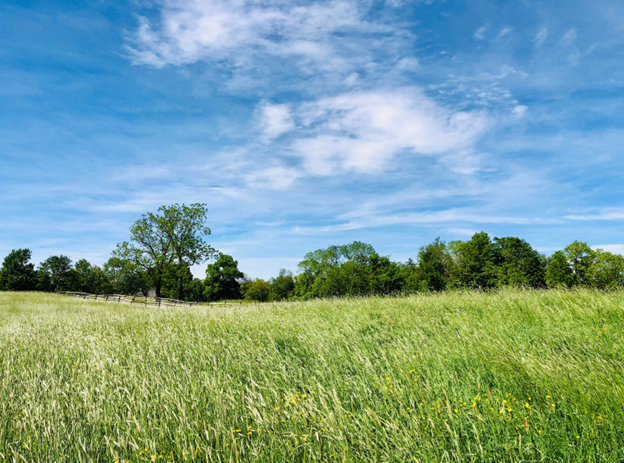
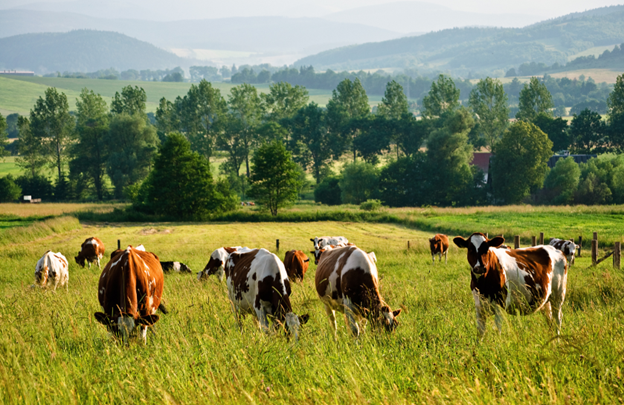
Walk across most established pastures in the United States and you will find the same two or three species doing most of the work: a cool-season grass, maybe a companion legume, and very little else. It is a familiar picture, and for a long time it seemed like a reasonable one. The grass grows. The animals graze. The cycle repeats.
What that picture misses is everything happening beneath the surface — and above it, in the air. The earthworms moving through the soil profile. The nitrogen-fixing bacteria colonizing root nodules. The native bees working the field edges. The soil microbes processing organic matter into stable carbon. All of those living systems depend, to a meaningful degree, on the botanical diversity of what grows in the pasture above them. The vast majority of established pastures in the United States are dominated by a near-monoculture, where most of the forage yield is obtained through two or three primary species. Natural prairies are a different story entirely, with scores of plant species in mixes of grasses, legumes, and forbs — sometimes more than 150 identified in a single native prairie.
That gap between what most pastures are and what they could be is not just an ecological abstraction. It has measurable consequences for soil nitrogen, soil carbon, microbial activity, earthworm populations, and the pollinators that support the broader agricultural landscape around every farm. A monoculture — or even a near-monoculture — is a missed opportunity for soil health, and the path back to a more functional system is simpler than most landowners expect.
The Nitrogen Problem in Grass-Only Pastures
Nitrogen is the engine of forage production. Without adequate nitrogen, cool-season grasses grow slowly, turn pale, and lose their competitive edge against weeds. In a pure grass stand, that nitrogen must come from somewhere — and for most producers, that somewhere is a bag of synthetic fertilizer.
The problem with that approach is not just cost, though nitrogen fertilizer prices have remained volatile and expensive. The deeper problem is that synthetic nitrogen applied to a grass monoculture is a one-way transaction: you put nitrogen in, the grass uses some of it, and the rest leaches out of the soil profile or volatilizes before the next growing season. You must keep buying it. The soil never learns to provide for itself.
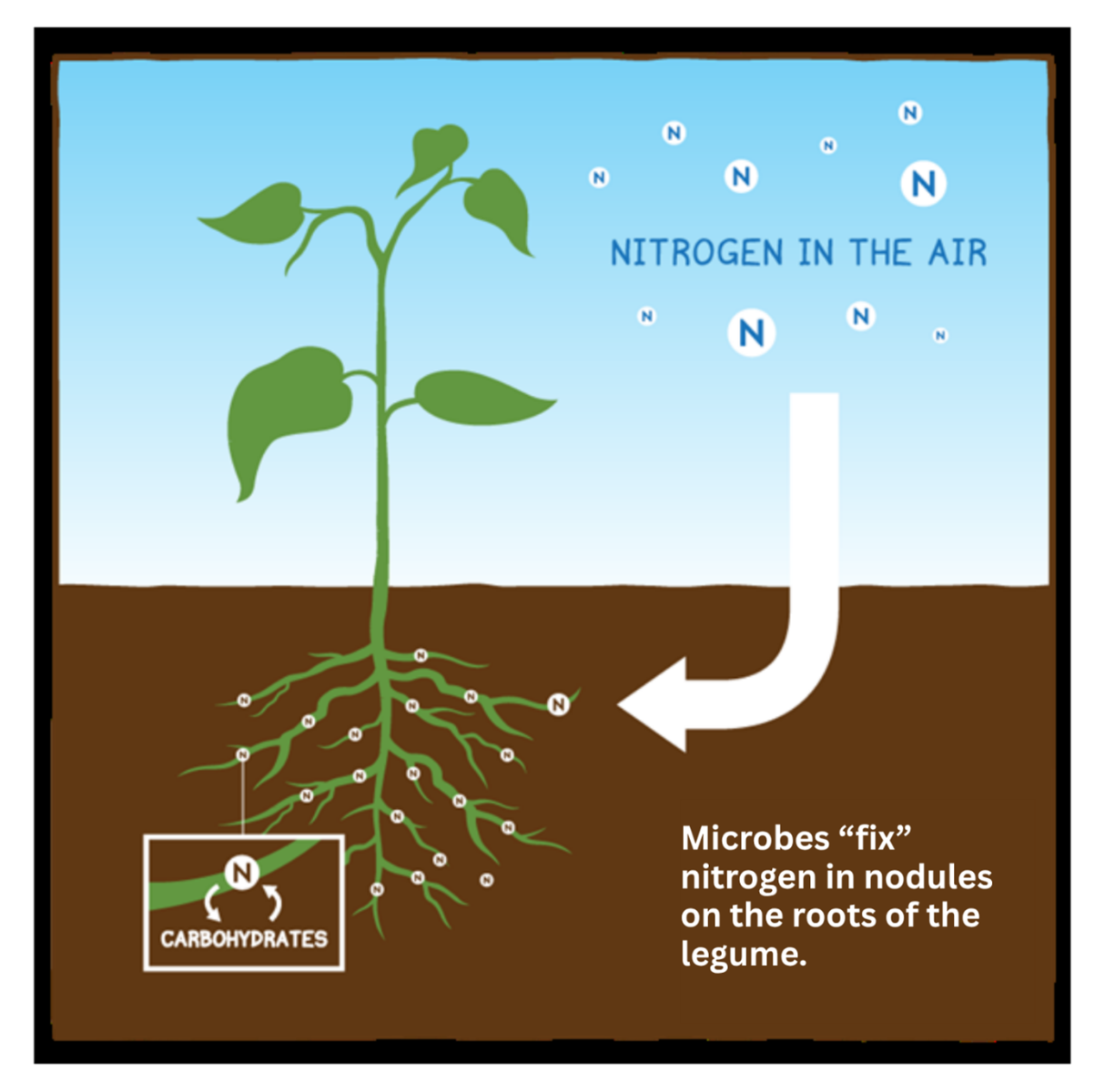
Clover changes that equation fundamentally. All legumes form a symbiotic relationship with Rhizobium bacteria, which colonize root nodules and convert atmospheric nitrogen — which makes up approximately 78 percent of the air we breathe — into a form that plants can use. As legume roots and leaves die back and decompose, that nitrogen is released into the surrounding soil and becomes available to the grasses growing alongside it.
The nitrogen contribution is substantial. If 20 to 30 percent of the pasture is planted in clover, that stand can fix 80 to 200 pounds of nitrogen per acre, depending on growth conditions and species. This is often enough nitrogen for the whole pasture. There is also a meaningful bidirectional dynamic at work. Research published in Plant and Soil found that legume-grass mixtures procure more nutrients from the soil than when either species grows alone. When grasses and clover grow together in unfertilized grassland, more nitrogen is procured by the plant community, and other limiting plant nutrients in the soil are better exploited.
Field Note — Maximum Nitrogen Production: If your primary goal is the most aggressive nitrogen credit possible, consider adding Fixation Balansa Clover to your rotation. This high-performance annual clover has demonstrated nitrogen fixation of over 200 pounds per acre in university trials — more than most perennial clovers deliver in the same window. In a trial conducted at the Ewing Demonstration Center in Illinois, decomposing Fixation Balansa Clover added 269 pounds of nitrogen per acre over a period of six and a half months, improving soil nitrogen contribution and soil ammonium levels by 40 and 80 percent respectively compared to a control variety. Because it is an annual, it fits naturally into rotational systems, dying back at frost and releasing its stored nitrogen for the following season's grasses without competing for long-term canopy space. Fixation is also tolerant of variable soil types and can survive short periods of standing water, adding further versatility for fields with uneven drainage.
What Pasture Diversity Does to the Soil Beneath Your Feet
Nitrogen fixation is the headline benefit of adding legumes to a grass stand, but it is far from the only one. The effects of increasing botanical diversity ripple through the entire soil ecosystem in ways that compound over time.
A nine-year study conducted by USDA-ARS researchers at the Pennsylvania State University Hawbecker Research Farm examined this directly. Researchers compared paddocks with either a two-species mixture of orchardgrass and white clover, or a five-species mixture adding chicory, tall fescue, and alfalfa. Over the course of the study, soil organic carbon accumulation averaged 1.8 tons of carbon per hectare annually with the five-species mix, compared to just 0.5 tons per hectare annually with the two-species mix — more than three times the rate of carbon sequestration.
That difference in soil carbon has cascading practical benefits. Every percent increase in soil organic matter substantially increases a soil's water-holding capacity — meaning more diverse pastures are more resilient to both drought and heavy rainfall events. Soils that hold more water absorb more of what falls from the sky rather than letting it run off with top-soil and dissolved nutrients.
Applied diversity trials documented by Graze magazine showed even more striking results. A diverse 18-species warm-season mix compared to a near-monoculture showed soil nitrogen increasing by 58 pounds per acre due to enhanced rhizobia activity from the included legumes, earthworm populations reaching an estimated 130,000 per acre, and soil microbial activity increasing by 44 percent as measured by CO₂ respiration.
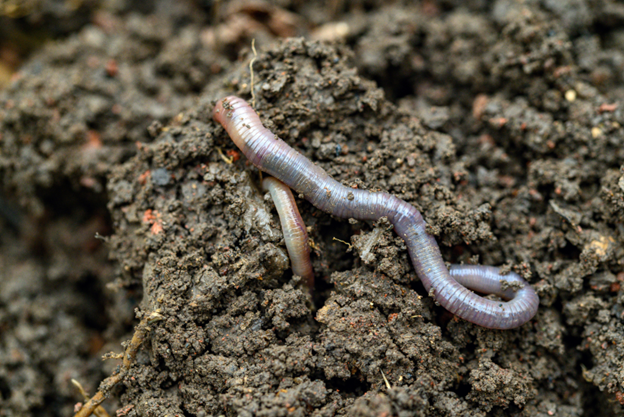
Those earthworm numbers matter more than they might seem. Earthworms are the biological infrastructure of a productive soil — they create channels that allow water to infiltrate, they process organic matter into stable humus, and their activity is one of the most reliable indicators of overall soil biological health. Research confirms that intensive management and monocultures are associated with lower earthworm diversity and density, with significant negative effects on the soil functions those earthworms provide.
Diversity Spotlight — The Biological Ripper
Not all roots are created equal. While clovers fix nitrogen near the soil surface, some species work far deeper. Yellow Blossom Sweet Clover is a biennial legume with one of the most aggressive root systems in the legume world. Its taproot can reach up to five feet deep, punching through compacted subsoil layers, aerating dense horizons, and creating the vertical channels that water and earthworms need to thrive. As a soil-improving crop, Yellow Blossom Sweet Clover probably has no equal. It has a deep taproot system that penetrates the subsoil, produces a large amount of growth that can be quickly broken down and converted to organic matter, and fixes high levels of nitrogen on heavy clay soils. Where compaction limits productivity, it acts as a biological tillage tool — working subsurface layers that a disc or chisel plow cannot easily reach year after year.
The Pollinator Layer: What Your Pasture Owes the Landscape
The benefits of pasture diversity do not stop at the soil surface. The same botanical variety that supports soil health above and below ground also supports the pollinator communities that are increasingly recognized as critical infrastructure for the broader agricultural landscape.
Research estimates that 87.5 percent of flowering plants depend on animal pollinators for reproduction. In agriculture, 87 of the leading global food crops and 35 percent of global production volumes by weight are dependent upon animal pollination. Yet native bee populations have declined substantially in recent decades, driven primarily by habitat loss. A grass monoculture provides almost nothing for pollinators — no nectar, no pollen, no nesting habitat, no reason to be there.
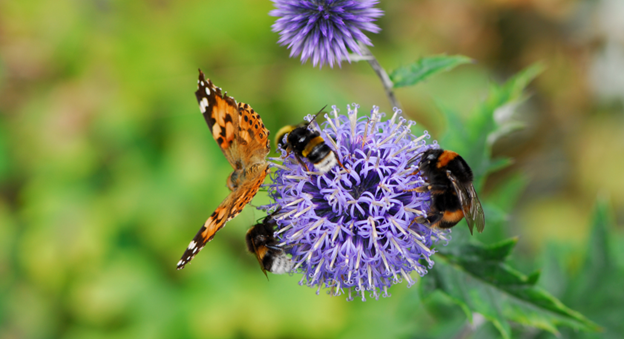
The Xerces Society promotes the use of bee pastures managed for plants that maximize bee reproduction. An effective bee pasture must provide blooming plants throughout the nesting period, from early spring through late fall, and typically consists of high-density wildflower mixes with a diversity of plant species. Clovers and vetches are among the most effective non-native species for supporting generalist pollinators. University research from multiple regions confirms that wildflower mixes attract greater abundance and richness of wild bees compared to unmanaged control plots, and that designing mixes to provide continuous bloom throughout the growing season is critical to supporting the greatest pollinator species richness.
Research from the world's longest-running ecological experiment at Rothamsted in England found that legume-rich pastures represent an attractive solution where managing grasslands for pollinator function is the primary aim. Plots with high proportions of leguminous species maintained yields while also supporting high numbers of pollinators, including bees.
Making the Transition: Practical Starting Points
Moving from a near-monoculture toward a diverse, biologically active pasture does not require starting over. It requires adding species thoughtfully, matching each one to the specific problem it solves.
For your standard forage base
Our White Dutch Clover and Red Clover are the proven foundation. White Dutch Clover's spreading stolon habit makes it effective at filling bare patches and maintaining a consistent presence under grazing pressure. Red Clover's more upright growth and higher dry matter production make it a strong complement where forage yield is a priority alongside nitrogen fixation. Maintaining a mixture of 20 to 30 percent clover and 70 to 80 percent grass provides optimal performance and can generally fix enough nitrogen to meet the needs of both components. Closely graze or clip pastures to reduce competition in an existing grass stand and allow clover to establish.
For mineral density and drought resilience
Adding a forage forb introduces taproot diversity that pulls subsoil minerals into the grazing zone — minerals that shallow-rooted grasses alone often cannot access. Forage chicory is a natural mineral collector, extremely rich in trace minerals, with a deep taproot that can pull subsoil nutrients including potassium, sulfur, calcium, zinc, and iron into the upper soil profile. University of Vermont Extension recommends incorporating chicory at 2 pounds per acre in mixed grass-legume seedings, noting that a combination of grasses, legumes, and herbs provides a mix of shallow-rooted and tap-rooted plants that create channels into the subsoil and bring up necessary nutrients, resulting in a healthy pasture polyculture with improved water percolation and soil ecosystem function. Our Chicory is purpose-selected for this role in mixed pasture systems.
For soil variability and wet areas
Pastures are rarely uniform across their full acreage. Low-lying corners, drainage way edges, and areas with periodic flooding often receive the same seed mix as the well-drained uplands — and then underperform year after year. Alsike Clover is the problem-solver clover for difficult sites. It tolerates soil pH as low as 5.0, withstands seasonal flooding for up to six weeks, and produces in wet, heavy clay, and slightly acidic soils where red and white clover fail. It fixes 60 to 120 pounds of nitrogen per acre and produces high-quality forage comparable to alfalfa, making it a dependable way to add legumes, nitrogen, and forage value to the low-lying areas of your field that other species routinely thin out of. Our Alsike Clover fits naturally alongside red and white clover in a diversified mix, covering the wet spots that standard mixes leave behind.
For field edges, fence lines, and low-productivity areas
Adding our Pollinator Friendly Turf Mix or Honey Bee & Wildflower Mix extends ecological benefit beyond the grazing paddock itself. Research suggests that if 20 to 30 percent of the surrounding landscape within a mile of the farm is maintained as permanent pollen and nectar-rich habitat, many types of crops can get their pollination needs met from the wild bees sustained by that habitat. Even small plantings on marginally productive ground — corners of fields, areas around farm buildings, strips along waterways — contribute meaningfully to local pollinator populations and the ecosystem services they provide.
Prescribing Diversity: A Quick-Reference Guide
Every pasture has different problems and different goals. Use this table to match the right addition to what your land is telling you:
|
What your pasture needs |
The right addition |
Why it works |
|
Maximum nitrogen production |
Annual legume; fixes 200+ lbs N/acre; releases nitrogen at termination for grasses |
|
|
Break up soil compaction |
Taproot penetrates up to 5 feet; creates biological drainage channels |
|
|
Subsoil mineral access |
Deep taproot scavenges calcium, zinc, iron, and potassium from below grass root zone |
|
|
Wet spots and acidic areas |
Tolerates flooding, pH as low as 5.0; produces where red and white clover fail |
|
|
Pollinator habitat |
Pollinator Friendly Turf Mix + Honey Bee & Pollinator Wildflower Mix |
Continuous-bloom species across the season; supports native bees and beneficial insects |
|
Standard forage base with nitrogen |
Proven combination; 80–200 lbs N/acre; high palatability and stand persistence |
The Compounding Return on Diversity
The most important thing to understand about pasture diversity is that its benefits do not add linearly — they compound. More species means more diverse root architectures, which means better soil structure and more carbon storage. More legumes means more biological nitrogen, which means less synthetic fertilizer, which means more soil microbial diversity, which means better nutrient cycling. More flowering species means more pollinators, which means more functional ecosystem services in the surrounding landscape.
None of these outcomes require dramatic intervention. They require the patient, deliberate addition of species chosen for complementary function — starting with the simplest and most proven step available: getting the right legumes back into the pasture.
A monoculture of grass is a productive field. A diverse stand of grasses, legumes, forbs, and flowering species is a productive field that is also a nitrogen factory, a carbon sink, a pollinator refuge, and a self-reinforcing soil ecosystem. The difference between those two outcomes is often less than a few pounds of well-chosen seed per acre and a willingness to let biology do the work.
Browse our White Dutch Clover, Red Clover, Fixation Balansa Clover, Yellow Blossom Sweet Clover, Alsike Clover, Chicory, Pollinator Friendly Turf Mix, and Honey Bee & Pollinator Wildflower Mix to start building a more diverse, more productive pasture this season.
Sources
- Drovers. How Do Clovers Add Nitrogen to Pastures? https://www.drovers.com/news/beef-production/how-do-clovers-add-nitrogen-pastures
- Pubmed / Plant and Soil. Grasses Procure Key Soil Nutrients for Clovers. https://pubmed.ncbi.nlm.nih.gov/35941217/
- Mississippi State University Extension. Clover Provides Nitrogen for Soil, Forage for Cattle. https://ext.msstate.edu/news/feature-story/2004/clover-provides-nitrogen-for-soil-forage-for-cattle
- Graze Magazine / Dr. Allen Williams. Does Pasture Diversity Matter? https://www.grazeonline.com/doespasturediversitymatter
- Nature / npj Biodiversity. Trade-off Between Pollinator-Wildflower Diversity and Grassland Yields. https://www.nature.com/articles/s44185-024-00070-6
- USDA-ARS / ScienceDaily. More for Less in Pastures — Skinner & Dell (2016). https://www.sciencedaily.com/releases/2016/07/160720135856.htm
- Skinner, R.H. and Dell, C.J. (2016). Yield and Soil Carbon Sequestration in Grazed Pastures Sown with Two or Five Forage Species. Crop Science, 56(4). https://acsess.onlinelibrary.wiley.com/doi/10.2135/cropsci2015.11.0711
- PMC / Frontiers in Ecology. Pollinator Diversity Benefits Natural and Agricultural Ecosystems, Environmental Health, and Human Welfare. https://pmc.ncbi.nlm.nih.gov/articles/PMC9512639/
- Scientific Reports / Nature. The Impact of Multiple Agricultural Land Uses in Sustaining Earthworm Communities in Agroecosystems. https://www.nature.com/articles/s41598-024-81676-5
- Pubmed. Native Wildflower Plantings Support Wild Bee Abundance and Diversity in Agricultural Landscapes Across the United States. https://pubmed.ncbi.nlm.nih.gov/26910943/
- Morning Ag Clips / Grassland Oregon. Using Legumes to Reduce Nitrogen Fertilizer Costs — Fixation Balansa Clover Trial Data. https://www.morningagclips.com/using-legumes-to-reduce-nitrogen-fertilizer-costs/
- FIXatioN Balansa Clover Official Site. https://fixationclover.com/cover-crop/
- SARE. Sweet Clovers — Yellow Sweetclover Taproot and Soil Benefits. https://www.sare.org/publications/managing-cover-crops-profitably/legume-cover-crops/sweet-clovers/
- SARE. Agroecological Strategies to Enhance On-Farm Insect Pollinators. https://www.sare.org/publications/manage-insects-on-your-farm/recent-advances-in-ecological-pest-management/agroecological-strategies-to-enhance-on-farm-insect-pollinators/
- Nature's Seed. Alsike Clover Seeds — Wet Soil and Acidic Soil Clover. https://naturesseed.com/products/clover-seed/alsike-clover-seed/
- Smith Seed Services. Alsike Clover — Nitrogen Fixation and Soil Tolerance. https://smithseed.com/seed/cover-crops/clovers/alsike/alsike-clover
- UVM Extension / Champlain Valley Crop, Soil & Pasture Blog. Forage Chicory. https://blog.uvm.edu/cvcrops/tag/forage-chicory/
- Ag Proud. Chicory: Improved Varieties Are a Pasture Option. https://www.agproud.com/articles/33623-chicory-improved-varieties-are-a-pasture-option
- Penn State Extension. Pasture Species Selection by Animal Group. https://extension.psu.edu/pasture-species-selection-by-animal-group
- Penn State Extension. Plant Diversity to Extend the Grazing Season. https://extension.psu.edu/plant-diversity-to-extend-the-grazing-season