

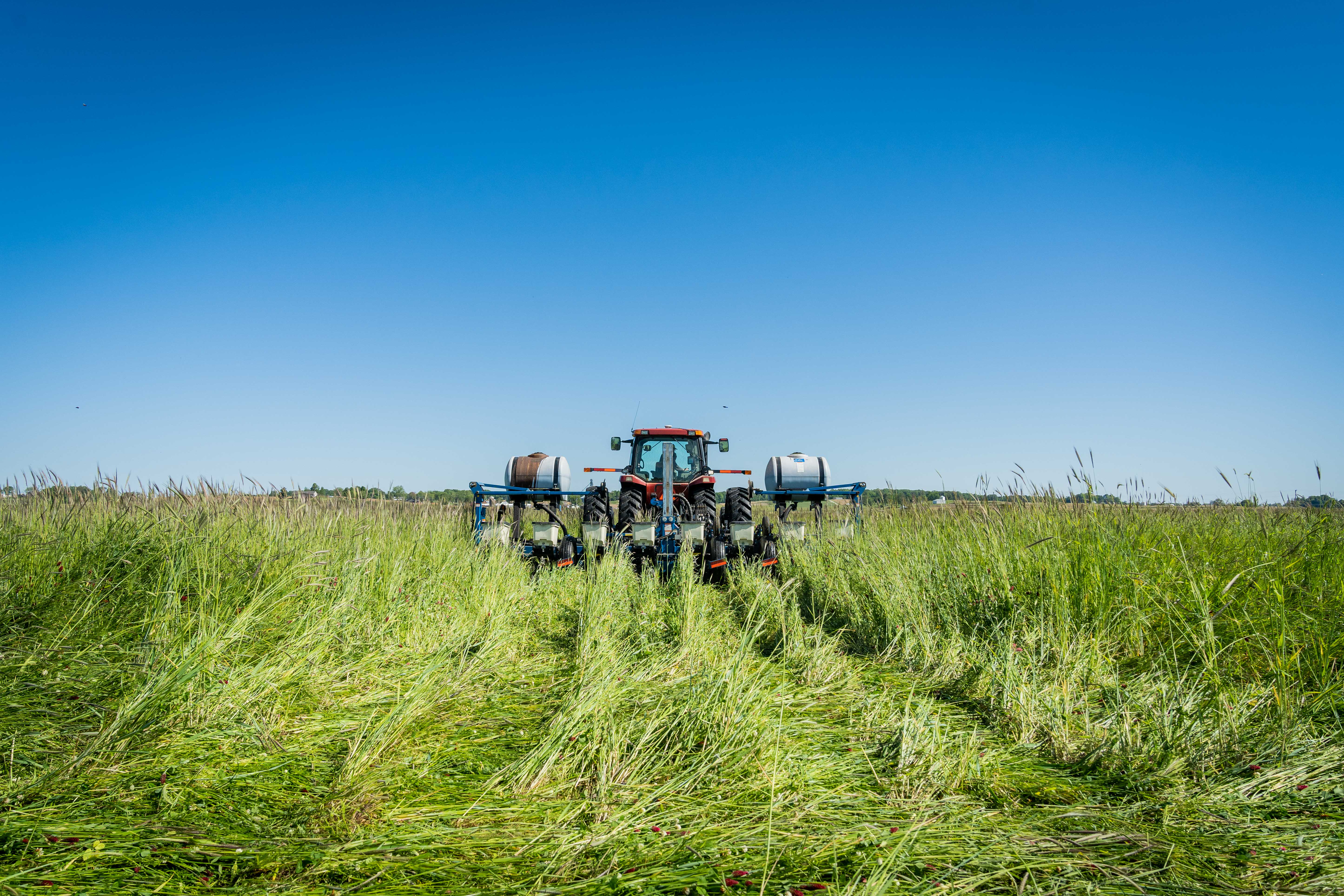
Over the last decade, increasing attention has been given to regenerative agriculture. While it may seem like a new concept, regenerative agriculture is a return to principles that have sustained productive farmland for generations. A return to working with natural systems rather than against them.
Switching to regenerative ag can help improve your operation’s long-term productivity and resilience. This article explores the core principles, specific practices, and business considerations of regenerative ag. Knowledge that will help you make these new environmentally beneficial practices economically viable for your farm.
The Philosophy and Principles of Regenerative Agriculture
Regenerative agriculture is a farming and ranching approach focused on restoring soil health and ecosystems by using practices that improve soil biodiversity, increase carbon sequestration, and enhance the water cycle.
Regenerative agriculture prioritizes working with natural systems rather than against them. This approach moves beyond sustainability, which aims to maintain current conditions, to actively reverse environmental degradation and build soil health that surpasses its current state.
The result is land, waters, and a climate in better shape for future generations.
Core principles and cropping practices include:
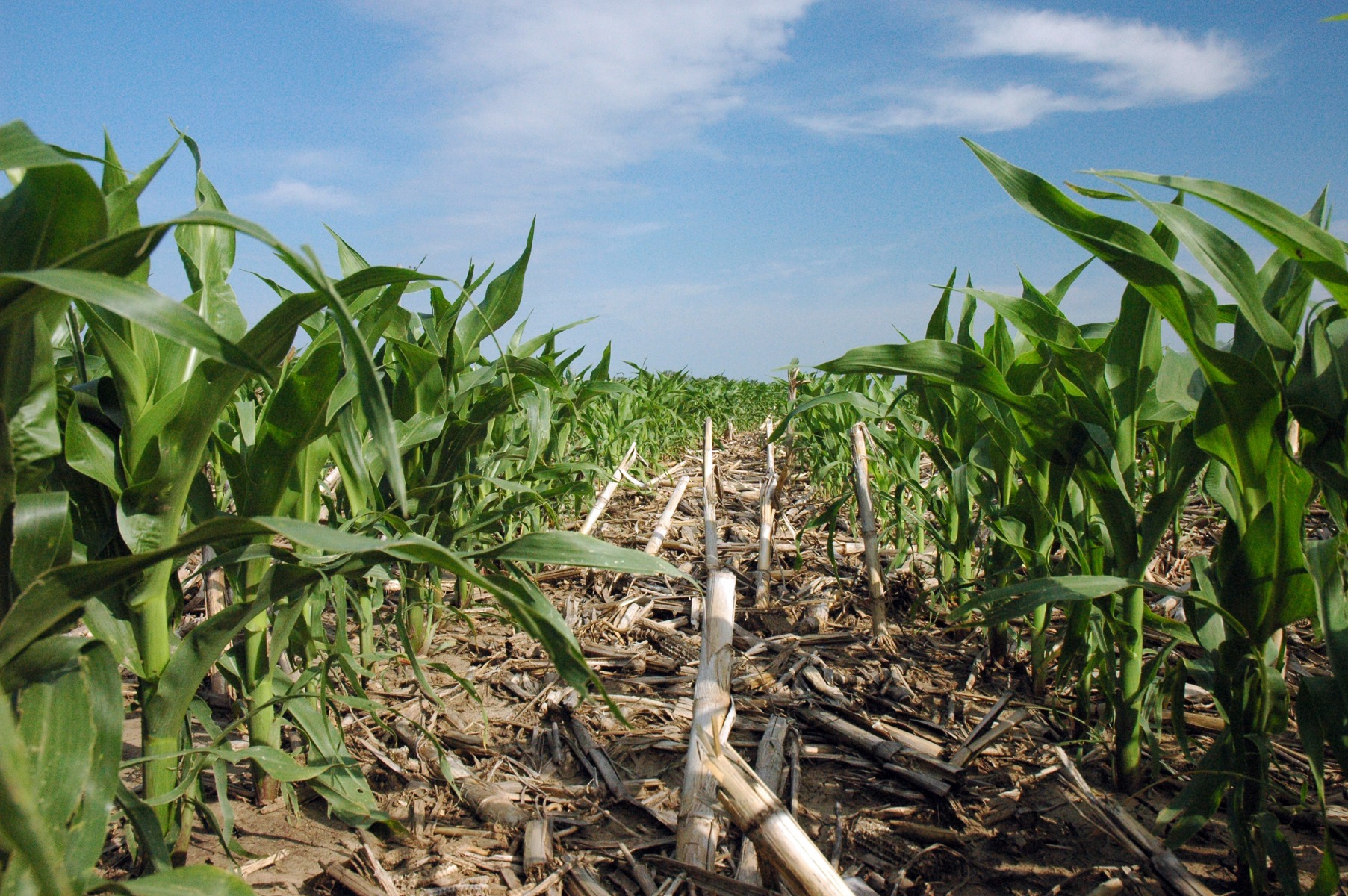
- Minimizing soil disturbance and the resulting physical, biological, and chemical disruption through practices like no-till or reduced-till.
- Keeping soil covered by using cover crops or mulch to minimize erosion and retain moisture.
- Increasing plant diversity to build healthy soil, increase biodiversity, and provide multiple sources of income.
- Maintaining living roots to stabilize soil and retain nutrients.
Benefits of Regenerative Agriculture
- Restores soil health: Builds soil organic matter and improves microbial biodiversity, creating more fertile, resilient soil.
- Combats climate change: Sequesters carbon in the soil, which can help reverse climate change.
- Enhances water systems: Improves water infiltration and retention in the soil, leading to cleaner water by reducing polluted runoff.
- Increases resilience: Makes farms more resilient to extreme weather events like droughts and floods.
- Supports wildlife: Creates a healthier environment that can enhance wildlife habitats.
Core Practices for Better Soil Health
At its core, regenerative ag focuses on practices that actively improve soil health. It moves away from treating it as a resource to be drawn from, toward treating it as an asset to build.
Poor or even mediocre soils can’t be improved quickly. Improving structure, fertility, and microbial activity is a slow process that requires time and dedication.
With regenerative ag, you’ll focus on implementing practices that provide individual and synergistic benefits. It may not be feasible to implement all of the following practices simultaneously, but adopting even one or two can lead to noticeable, meaningful improvements in your soil.
Maintaining Living Plant Cover
The foundation of regenerative soil health begins with keeping something alive and growing in fields throughout as much of the year as possible. The goal is to transition from thinking about the "off-season" as downtime to viewing the entire year as an opportunity for soil building.
Without living roots in the ground, bare soil becomes vulnerable to wind and water erosion, loses moisture through evaporation, and loses the beneficial soil structure that active root systems help maintain. When fields sit bare for extended periods, biological activity diminishes dramatically, and rebuilding it takes time and energy.
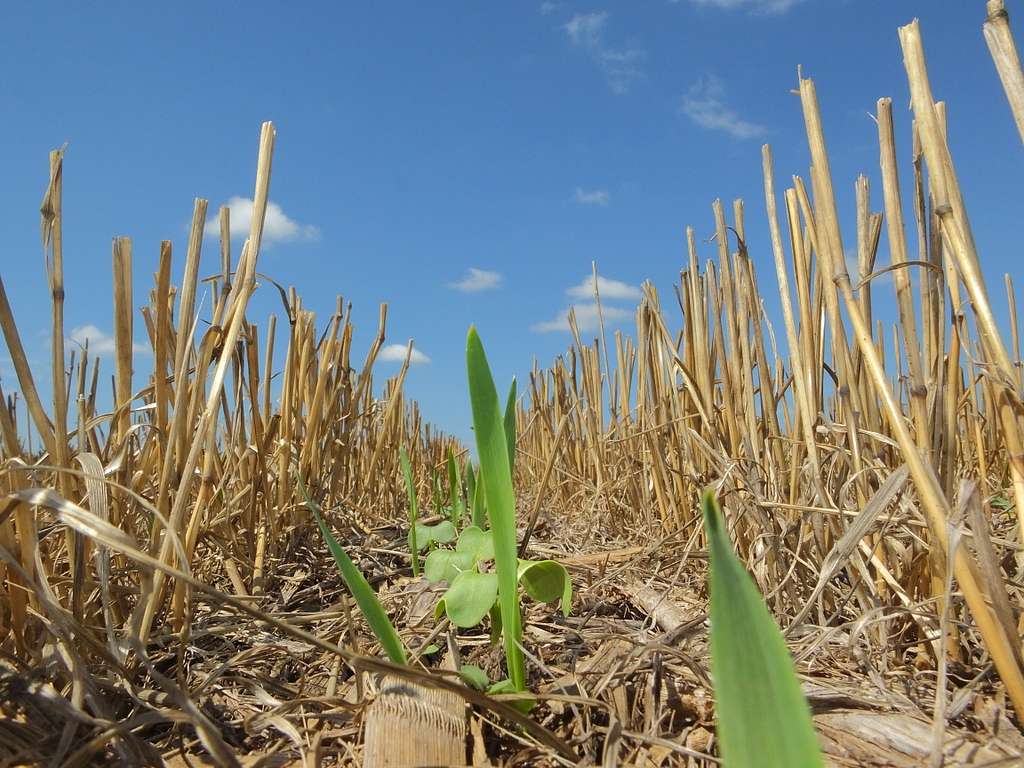
This doesn't mean you need to have cash crops growing year-round. Cover crops or strategically retained crop residue can protect and feed the soil when primary crops aren't growing.
Cover Cropping Strategies
Cover cropping is one of the easiest and most impactful ways to begin regenerative farming. Planting these non-cash crops minimizes bare soil, protects from erosion, adds organic matter, suppresses weeds, and provides habitat for beneficial insects and wildlife.
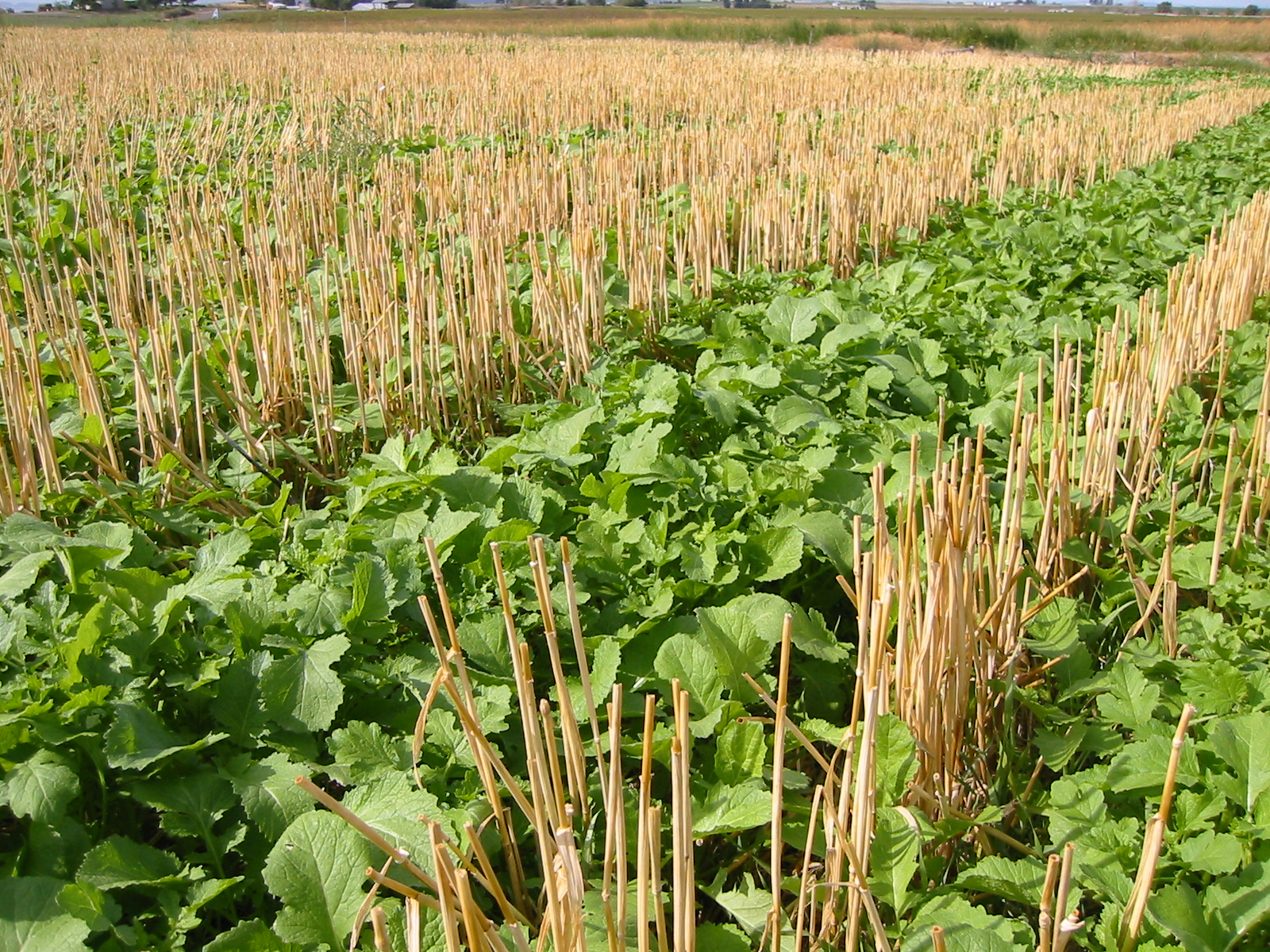 Photo Credit: A6m7mcguire | Wikimedia Commons | CC BY-SA 4.0 | no changes made

Your cover cropping strategy doesn’t have to be intricate. The key is to establish a protocol that works reliably for your existing operation, rather than designing one that requires perfect conditions to succeed.
Starting simple is the most effective way to begin cover cropping. A basic combination like pairing crimson clover with winter rye provides complementary benefits with relatively low management requirements.
- The clover adds nitrogen to the soil and helps break up soil compaction with its deep taproots.
- The rye produces substantial biomass, improves soil structure with its fibrous root system, and scavenges residual nitrogen that might otherwise leach away.
More diverse mixtures will offer additional advantages over simpler combinations but require more management. For instance, a four to six-species mix might include:
- Rye or spring oats to add biomass and improve soil structure
- Red and white clover or vetch to fix nitrogen
- Radish or turnips (purple top, york globe, or seven top) to grow deep into the soil and alleviate compaction
- Buckwheat for quick ground cover and pollinator support
Each plant family contributes different root structures, supports different microbial communities, and provides varied organic matter quality.
Increasing Crop Diversity
Diverse crop rotations are another key aspect of improving soil health in regenerative agriculture.
Breaking up monoculture sequences also interrupts the life cycles of common pests and reduces disease pressure, decreasing the need for chemical treatments. For instance, switching from continuous corn can significantly reduce corn rootworm populations. Alternating between host and non-host crops suppresses soybean cyst nematodes.
A rotation that includes plants from different families — such as grasses (corn, winter wheat), legumes (soybeans, peas), and broadleaves (sunflowers, canola) — contributes different types of organic matter to the soil, creates different soil structures, supports different microbial communities, and utilizes nutrients differently to create balanced soil fertility.
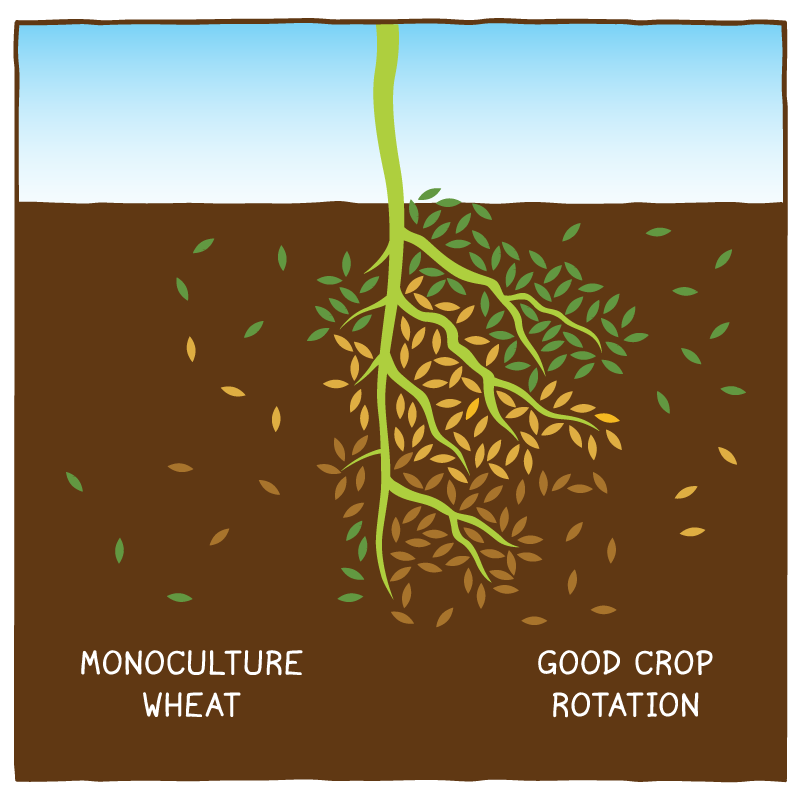 Photo Credit: PulseGrowers | Wikimedia Commons | CC BY-SA 4.0 | no changes made

If you are facing constraints that limit crop options, you’ll still see benefits in smaller diversity increases. Alternating between two crops is better than continuous monoculture.
Reducing Tillage Intensity
Tillage is a cornerstone of conventional agriculture, but we now know that excessive tilling negatively impacts soil. Each pass breaks apart soil aggregates, exposes organic matter to rapid oxidation, disrupts beneficial fungal networks, and can contribute to compaction issues below the tilled zone.
Moving away from conventional tillage practices toward reduced- or no-till systems is paramount for improving soil health.
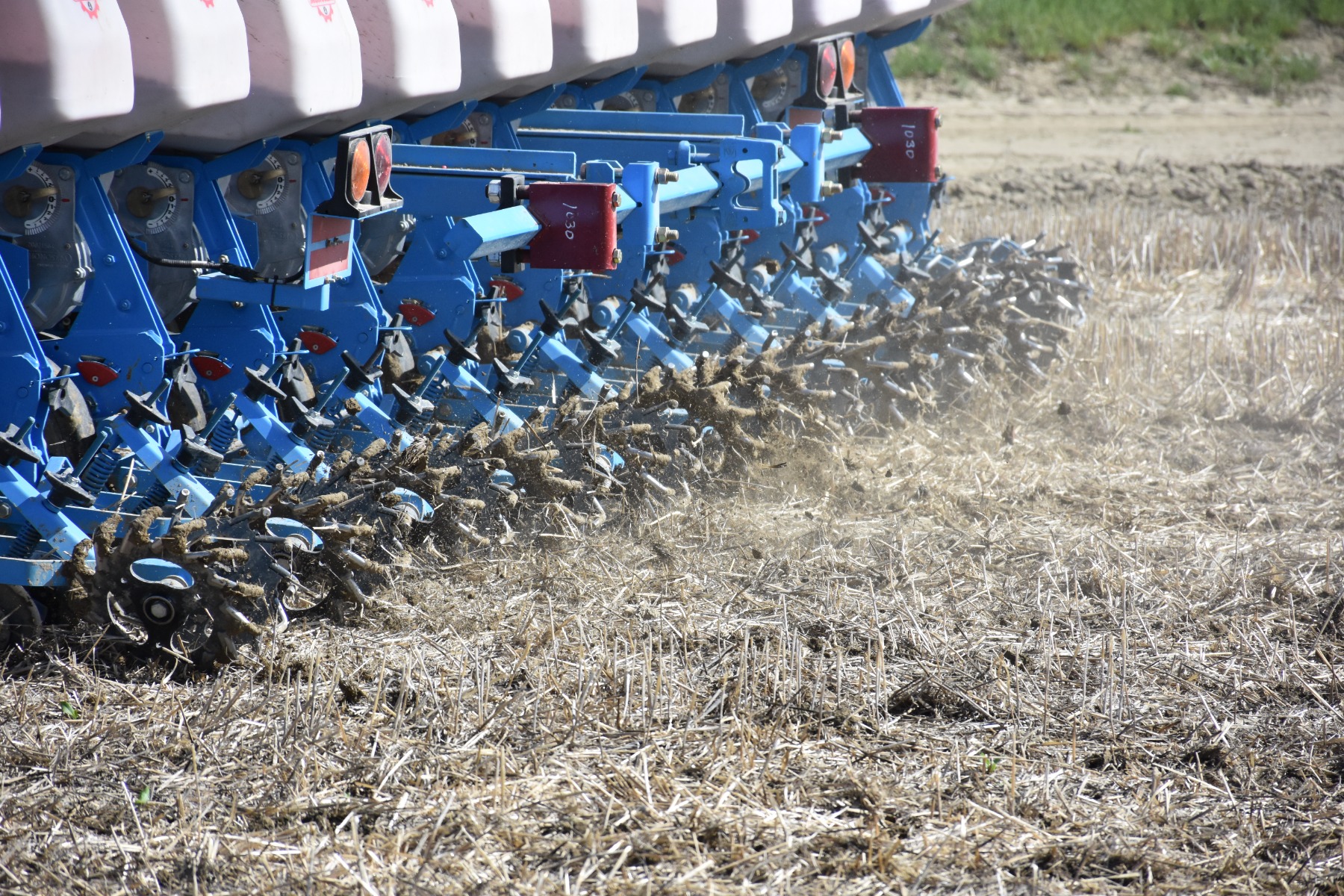
It might not be practical in all cases to transition to a complete no-till system. Instead, emphasize progress rather than perfection. Aim to reduce your tillage intensity and frequency wherever possible, while keeping it viable for your operation.
This could mean:
- Eliminating one or two in-season passes that only offer marginal benefits.
- Switching to zone or strip tillage combines some no-till benefits with the seedbed preparation advantages seen in conventional tillage.
- Delaying or eliminating fall tillage in favor of spring-only field preparation.
Remember, too, that using cover crops naturally reduces the need for secondary weed-control tillage, as they suppress weeds.
As you reduce tillage, you’ll see physical and biological benefits accumulate over time.
- Soil structure improves as aggregates form and stabilize.
- Fungal networks reestablish and enhance nutrient cycling.
- Organic matter stratifies naturally near the surface, where biological activity is highest, rather than being mixed throughout the plow layer.
- Water infiltration rates often improve dramatically as continuous pore spaces develop and earthworm populations increase.
Even though the most noticeable soil changes take time to observe, you will see some immediate benefits that will help offset some of your perceived challenges to switching up your tillage. Each pass you cut off saves fuel, reduces equipment wear, and frees up time during busy seasons.
Economic Considerations
For farmers to adopt different practices, they have to be financially viable. It doesn’t make sense to change how they do things and incur more costs. Transitioning to regenerative ag practices is no different. It does require an initial investment, but operations typically see economic performance improve over time.
One of the first economic benefits products see is reduced input costs. As soil biological activity increases, nutrients become more readily available, reducing the need for fertilizer applications. As soil structure improves, it enhances water infiltration through the root zone, potentially reducing irrigation requirements. You’ll also see less leaching of nutrients out of the soil profile.
Yields tend to remain comparable to those of conventional methods, but the advantage lies in consistent production. With this yield stability, poorly producing years become less severe, so you don’t experience as drastic financial swings from season to season.
Regenerative practices also offer additional revenue opportunities to capture added value. In many cases, you can apply for carbon credit programs, obtain sustainability certifications that increase sales costs, and market directly to environmentally conscious consumers who typically pay higher prices for sustainable goods.
Implementation Strategy
The most effective approach is making gradual, deliberate changes. Select one practice to start with. Once that becomes proficient, add another, and then another. This slow implementation helps reduce your risk and builds confidence with each change.
A good way to start is to use cover crops on challenging fields or reduce tillage on parcels with the most favorable conditions.
Along the way, you’ll want to keep comprehensive records to support decision-making. Use data from regular soil tests, cost tracking of inputs, yield monitoring, and observation of soil response to weather events to evaluate your program’s effectiveness and make adjustments as necessary.
Most operations see measurable improvements in soil health within 2 to 3 years. More substantial changes typically appear in years five to ten with consistent regenerative practices.
Long-Term Perspective & Strategy
Implementing regenerative agriculture on your farm requires patience and persistence. It isn’t a single-season game plan, but rather a long-term strategy spanning many growing seasons and a multitude of management decisions.
Ready to take the next step in building healthier soil? Contact us at Deer Creek Seed to discuss cover crop options and rotation strategies for your farm. Our expertise in matching plants to conditions can help you confidently implement regenerative practices, turning soil health goals into measurable results.
Additional Resources
- See how 3 regenerative agriculture ranchers have switched their mindset to set them up for success. Their stores are highlighted on the Noble Research Institute’s website.
- The University of Arizona Cooperative Extension talks about the differences between soil health and soil quality, sharing modern soil health concepts with agricultural producers.
- The Nature Conservancy's experts tackle the most common questions about food, farming, climate change, and biodiversity. Explore the complete guide or use the links to jump directly to the topics that interest you most.
- Curious about double cropping after your small grains? Want to keep your soil covered longer into the growing season or increase your winter forage stores? Click here to read a great article on this topic from the University of Wisconsin.
- Explore SARE’s seven specific management scenarios where farmers can expect faster returns on their cover crop investments.
- NC State Extension covers the proven benefits and practical management of winter annual cover crops for erosion control, nitrogen fixation, and soil health improvement in southeastern growing conditions.