


There is a concept in habitat management that separates the properties that consistently hold and move wildlife during daylight from those that produce only nocturnal activity. It is not the quality of the food plot alone, and it is not the size of the property. It is security. Wildlife — and white-tailed deer in particular — make decisions about when and where to feed, move, and bed based primarily on how safe they feel doing it. A food plot that deer can see into from a road, a neighboring property, or an adjacent field may be an excellent food source, but if deer feel exposed using it, they will wait until dark. The screen you plant around that food plot is often what determines whether you see deer there in daylight or only on a trail camera at 2 a.m.
Egyptian Wheat is one of the most effective, most affordable, and most accessible tools available for creating that security — and it is one that any landowner or wildlife manager can deploy successfully with relatively modest equipment and effort. But like any high-performance planting, the results you get from Egyptian Wheat are directly tied to how well you understand what it needs. High-quality screens are grown, not just thrown — and when it comes to Egyptian Wheat, fertility is the single most important factor separating an average stand from one that commands attention.
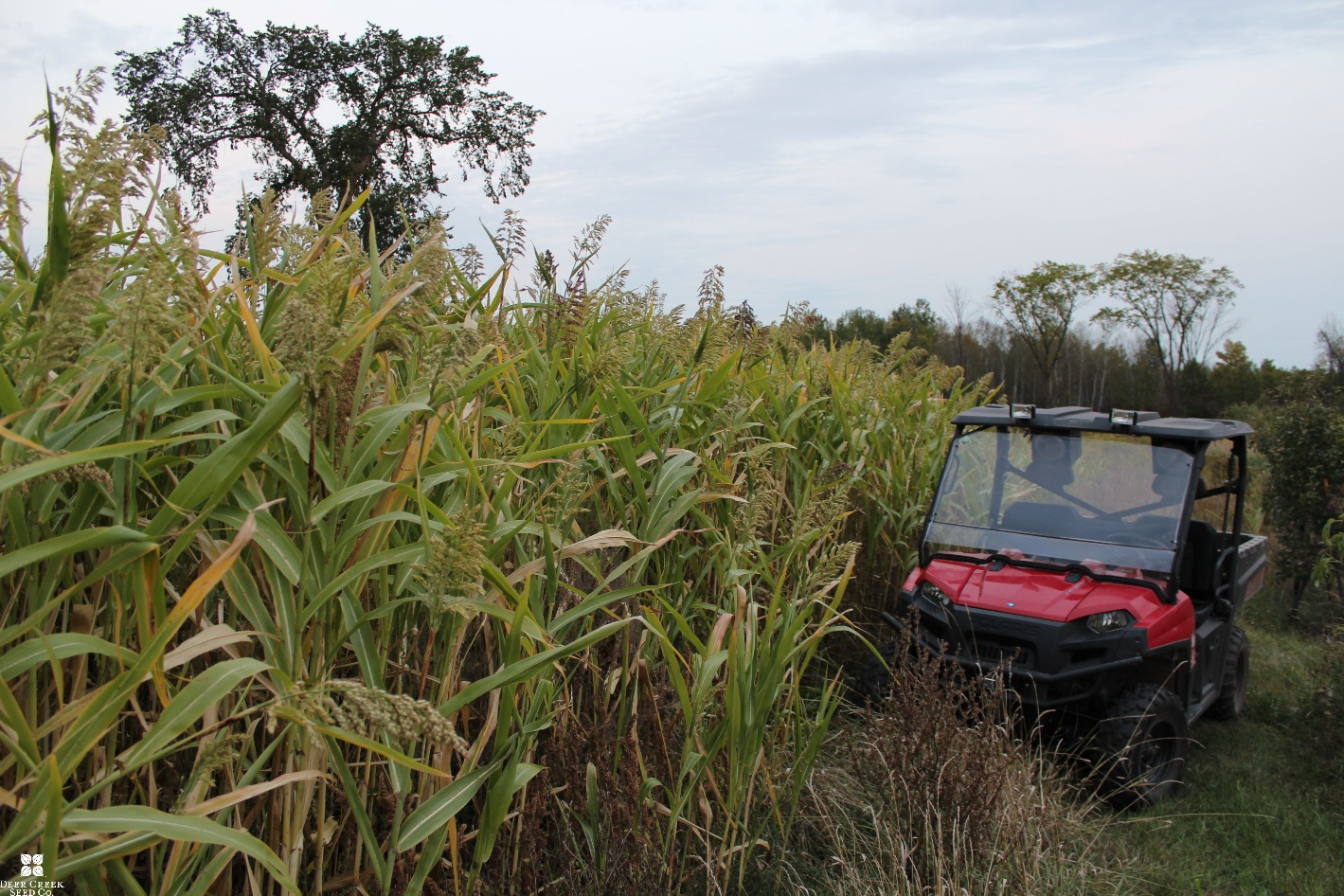
What Egyptian Wheat Is — and What It Isn't
Egyptian Wheat is frequently misunderstood by first-time planters. Despite its name, it is not a true wheat at all. Egyptian Wheat is a member of the sorghum family, known for its extreme height of 8 to 12 feet. It provides some food value at the tassel but is primarily used as thick cover for wildlife. It can be used as a food plot screen and deer blind when planted more heavily.
That distinction — sorghum, not wheat — matters because it dictates how you manage it. Egyptian Wheat is a warm-season annual grass that grows with the same heat-driven intensity as corn or grain sorghum. It responds dramatically to nitrogen, it requires warm soil to germinate reliably, it has a defined maturity window, and it winterkills with the first hard frost, making it an annual commitment that must be replanted each season. None of those characteristics are drawbacks — they are simply the terms of the relationship and understanding them is what allows you to get the most out of every planting.
One important management consideration worth establishing early: Egyptian Wheat is not deer food in any significant sense. If you are trying to screen a food plot from your access route, a nearby road, or neighboring property, using a seed variety that lacks a meaningful food component is generally best. This keeps deer on the correct side of the screen — in the food plot — and not within the screen itself where they can potentially detect your movements. This is one of the key reasons Egyptian Wheat outperforms corn as a screen. Corn draws deer into the screen, which is counterproductive. Egyptian Wheat simply grows tall and dense, doing its job without inviting deer to dismantle it from the inside.
Timing: Respect the Soil Temperature
Egyptian Wheat is a warm-season crop that is highly sensitive to cold soil conditions. Plant it too early and it will sit in the ground waiting, germinating slowly and unevenly, and losing ground to early-season weed competition. Plant it at the right time and it erupts from the soil quickly, canopies fast, and shades out competing vegetation with minimal intervention.
Most agronomists suggest waiting to plant sorghum until the minimum daily soil temperature is 60°F and the forecast for the next 10 days is for warm weather. The lower the temperature, the slower sorghum will germinate and emerge. For Egyptian Wheat specifically, adequate germination takes place when soil temperature is between 77°F and 86°F, with much poorer germination occurring at lower temperatures. Poor stands usually result from very early or very late plantings.
In practical terms for the upper Midwest, this means late May through June is the ideal planting window, with early June being the sweet spot for most of Wisconsin, Minnesota, and Michigan. In more southerly locations, late April or early May plantings are viable. The goal is to give Egyptian Wheat no less than 90 days — and 120 to 150 days is preferred for maximum results — to mature before the first frosts arrive. Plan backward from your expected first frost date and plant accordingly. A screen that doesn't reach full height before September is far less effective than one that has been standing since August.
Annual screens such as Egyptian Wheat should be planted in late spring to early summer once soil temperatures reach at least 60°F. These fast-growing plants require warm conditions to establish quickly. Use a soil thermometer to confirm — air temperature and soil temperature diverge enough in spring that guessing based on the calendar alone will cost you stands.
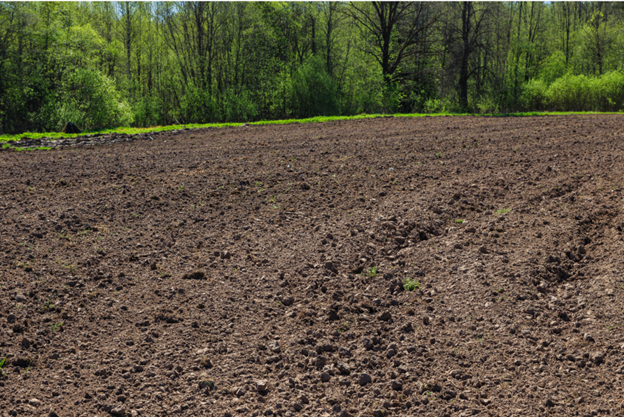
Seedbed Preparation: Set the Foundation
Egyptian Wheat is a relatively forgiving crop, but it is not a no-prep crop. A properly prepared seedbed — firm, weed-suppressed, and with good seed-to-soil contact — is the difference between a stand that fills in completely and one that is patchy and uneven.
Start by addressing soil fertility before you do anything else. A soil test is the most cost-effective investment you can make in a screen planting. Egyptian Wheat performs best at a soil pH between 5.6 and 6.5, and while it will tolerate moderate acidity and variable fertility better than many crops, it rewards good soil conditions with dramatically better height and density. Sorghum-sudangrass will tolerate low-fertility and moderate acidity but prefers good fertility and near-neutral pH.
Once the soil test results are in hand, till or disc the planting area to break up surface residue and create a firm, consistent seedbed. For existing strips that were planted to Egyptian Wheat the previous season, brush hogging the previous year's residue followed by a couple of disc passes with urea incorporated is an efficient approach before cultipacking and planting. Cultipacking after seeding — whether with a dedicated implement, ATV tires, or truck tires driven over the broadcast area — improves seed-to-soil contact meaningfully and accelerates germination. For remote or difficult-to-access strips, a light drag or boot packing will accomplish much the same thing.
Seeding Rates and Strip Width: Thinking Strategically
How much seed you plant and how wide you plant it determines not just what you get this season, but what role the screen plays in your overall habitat and access strategy.
For standard screen plantings, traditional recommendations call for 8 to 12 pounds per acre drilled or broadcast. However, many experienced habitat managers seed at higher rates — 15 to 20 pounds per acre — when the goal is a dense, self-supporting visual barrier rather than maximum individual plant height. Planting at higher rates targets a potential of 8 to 10 feet high within a thick, self-supporting stand. A tighter spacing between stalks and smaller seed heads has a much better ability to withstand heavy snows, and in some cases a strong stand can carry into late winter following repeated snows.
The trade-off is worth understanding: when planted too thick, Egyptian Wheat can compete against itself for nutrients and light, reducing overall height. The higher-rate, thicker planting sacrifices some maximum height in exchange for density and structural integrity. For applications where the screen must stand through November and into December — the heart of late archery and firearm seasons — that trade-off is usually worth making.
For strip width, the guidance is consistent: when planting in strips, aim for 10 to 15 feet wide. When using for screening you want it thick enough and wide enough so deer cannot see through it. When thick enough it also cuts down on noise for access. Wider strips of 20 to 30 feet provide even more robust concealment and allow room for deer to use the screen as transitional cover, moving through it between bedding and feeding areas. When planted in 15 to 30-foot-wide swaths across open areas, Egyptian Wheat can serve as a corridor for deer movement in as little as 45 to 50 days.
When planning your strip layout, think about wind direction and hunting access simultaneously. The screen should block sightlines from the direction deer are most likely to approach from, and your entry and exit routes should run parallel to — or through — the screen, not perpendicular to it where you risk crossing deer travel lanes.
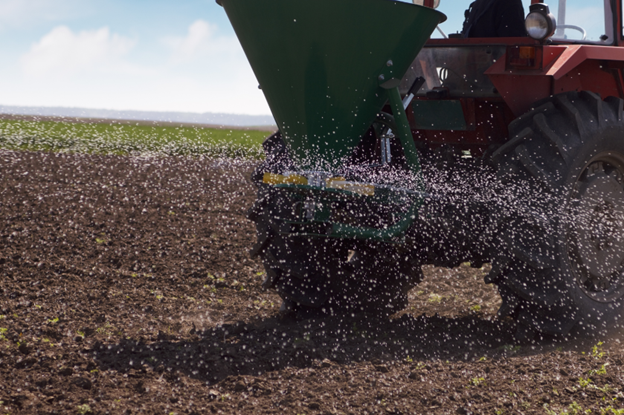
Fertility: The Non-Negotiable Variable
If there is a single message that experienced Egyptian Wheat growers universally agree on, it is this: nitrogen drives height, and height is the whole point. A stand that maxes out at six feet in mediocre soil is far less effective than one pushing ten feet in well-fertilized ground. Fertility is not optional — it is the primary lever you have to control the outcome of your screen.
Egyptian Wheat loves nitrogen. Outside of soil test recommendations, do not hesitate to broadcast an additional 50 to 100 pounds of 46-0-0 (urea) approximately four to six weeks following germination, prior to a significant rain event. Timing the top-dress application before a rain is critical because urea requires moisture to convert and move into the soil — urea breakdown begins as soon as it is applied to the soil. With the enzyme urease plus any small amount of soil moisture, urea normally hydrolyzes and converts to ammonium and carbon dioxide within two to four days. Unless it rains, urea must be incorporated during this time to avoid ammonia loss.
However — and this is a point many first-time planters miss — nitrogen alone is not the complete fertility picture. When planting Egyptian Wheat, the soil nutrients are crucial for a successful stand. Do not make the mistake of adding nitrogen fertilizer without also adding potassium. Egyptian Wheat is like corn and needs a lot of nitrogen to grow tall, but potassium grows strong stalks. You need stalk strength so the screen stands all season long. Too much nitrogen will make it grow tall but with weak stalks. Balance is essential for the best results.
A stand that grows to 12 feet but collapses under the first heavy rain or early November snow is a stand that fails at its most critical moment. The combination of adequate nitrogen for height and adequate potassium for stalk integrity is what produces a screen that stands when you need it most. Standard biomass production for sorghum family crops typically requires 75 to 100 pounds of nitrogen per acre across the full season — split between pre-plant incorporation and a four-to-six-week post-germination top-dress is generally the most effective approach.
Egyptian Wheat and the Silver Screen Food Plot Mix
Egyptian Wheat from Deer Creek Seed is available as a standalone planting for landowners who want maximum height and versatility — seed your own layout, your own widths, your own spacing strategy.
For those who want a ready-built screening blend that pairs Egyptian Wheat with complementary species for added density, structural variation, and a longer effective season, our Silver Screen Food Plot Mix is the purpose-built solution. A well-designed screening mix combines the height of Egyptian Wheat with the density and wind resistance that comes from mixing species of varying growth habits and stalk structures. Varied heights within the stand create a more visually impenetrable barrier than a monoculture planting, and the structural variation improves the screen's ability to hold up through late season weather events.
Whether you choose straight Egyptian Wheat or the Silver Screen Mix, the same fertility and timing principles apply. The screen is only as good as the soil and management behind it.

Stand Management and Longevity
Egyptian Wheat requires very little management once established — the crop's rapid growth and canopy development effectively shade out most weed competition before it becomes a problem. The main post-planting management consideration is weed pressure during the first two to three weeks after germination, before the canopy closes. If a slow start allows weeds to get ahead of the stand, a labeled atrazine application can help reset the competition balance without harming the Egyptian Wheat itself.
After the season, Egyptian Wheat's residue decomposes over winter, contributing organic matter back to the soil. Egyptian Wheat also helps improve the soil. After a season of growth, the soil below a stand is noticeably darker and richer than before — the decomposing root mass and stem residue actively improve soil structure and organic matter content. This makes it an excellent transitional planting while permanent screens — switchgrass, conifers, or native shrubs — are being established in adjacent rows. Think of Egyptian Wheat as a short-term solution for years one through three, quick-growing pines as an intermediate tool for years four through twelve, and slower-growing but long-lived spruce trees as the permanent fix. Each layer serves its role, and Egyptian Wheat fills the immediate need while longer-term investments mature.
Because it is an annual, Egyptian Wheat must be replanted each season. It does not volunteer reliably enough to count on a second-year stand from self-seeding. Plan your seed order early — availability can be limited as the planting season approaches — and build your fertility and seedbed prep timeline backward from your target planting date.
The landowner who invests in a well-planned, well-fertilized Egyptian Wheat screen invests in daylight deer activity. The screen that keeps wildlife feeling secure during feeding hours, that hides your entry and exit from the property, and that creates the natural funnels and pinch points that define quality habitat — that screen doesn't happen by accident. It happens because someone understood what the crop needed, gave it the fertility to perform, and planted it at the right time in the right place.
Browse our Egyptian Wheat and Silver Screen Food Plot Mix to start planning your screen this season.
Sources
- Realtree. Food Plot Tip: Planting Egyptian Wheat as a Plot Screen. https://realtree.com/brow-tines-and-backstrap/food-plot-tip-planting-egyptian-wheat-as-a-plot-screen
- Whitetail Obsession Outdoors. The Dos & Don'ts of Egyptian Wheat Food Plot Screening. https://www.whitetailobsessionoutdoors.com/blogs/2022/1/21/the-dos-amp-donts-of-egyptian-wheat-food-plot-screening
- Whitetail Habitat Solutions. Egyptian Wheat Food Plot Screening. https://www.whitetailhabitatsolutions.com/blog/egyptian-wheat-food-plot-screening
- Deer Food Plots. Egyptian Wheat for Deer. https://deerfoodplots.org/deer-food-plots/egyptian-wheat-for-whiteail-deer/
- Whitetail Obsession Outdoors. The Dos & Don'ts of Egyptian Wheat Food Plot Screening — Strip Width. https://www.whitetailobsessionoutdoors.com/blogs/2022/1/21/the-dos-amp-donts-of-egyptian-wheat-food-plot-screening
- Missouri Whitetails Forum. Egyptian Wheat — Soil Temperature for Germination. https://www.missouriwhitetails.com/threads/egyptian-wheat.219038/
- SARE. Sorghum-Sudangrass Cover Crop. https://www.sare.org/publications/managing-cover-crops-profitably/nonlegume-cover-crops/sorghum-sudangrass/
- Preferred Seed. Egyptian Wheat Fact Sheet. https://preferredseed.com/Portals/0/Documents/ForageSpecs/Annual%20Forage/Wheat/Egyptian%20Wheat.pdf
- Iowa Whitetail Forums. Egyptian Wheat — Urea Application Timing. https://iowawhitetail.com/community/threads/egyptian-wheat.28421/
- Sorghum Checkoff. Planting, Row Spacing and Seeding Rate. https://www.sorghumcheckoff.com/our-farmers/grain-production/planting-row-spacing-and-seeding-rate/
- Thunder Ridge Outdoors. Guide to Food Plot Screening. https://thunderridgeoutdoors.com/media/food-plot-blog/guide-to-food-plot-screening/
- Whitetail Habitat Solutions. Best Food Plot Screens. https://www.whitetailhabitatsolutions.com/blog/best-food-plot-screens
- Whitetail Habitat Solutions. 3 Varieties of Deer Screening Cover. https://www.whitetailhabitatsolutions.com/blog/3-varieties-of-deer-screening-cover