

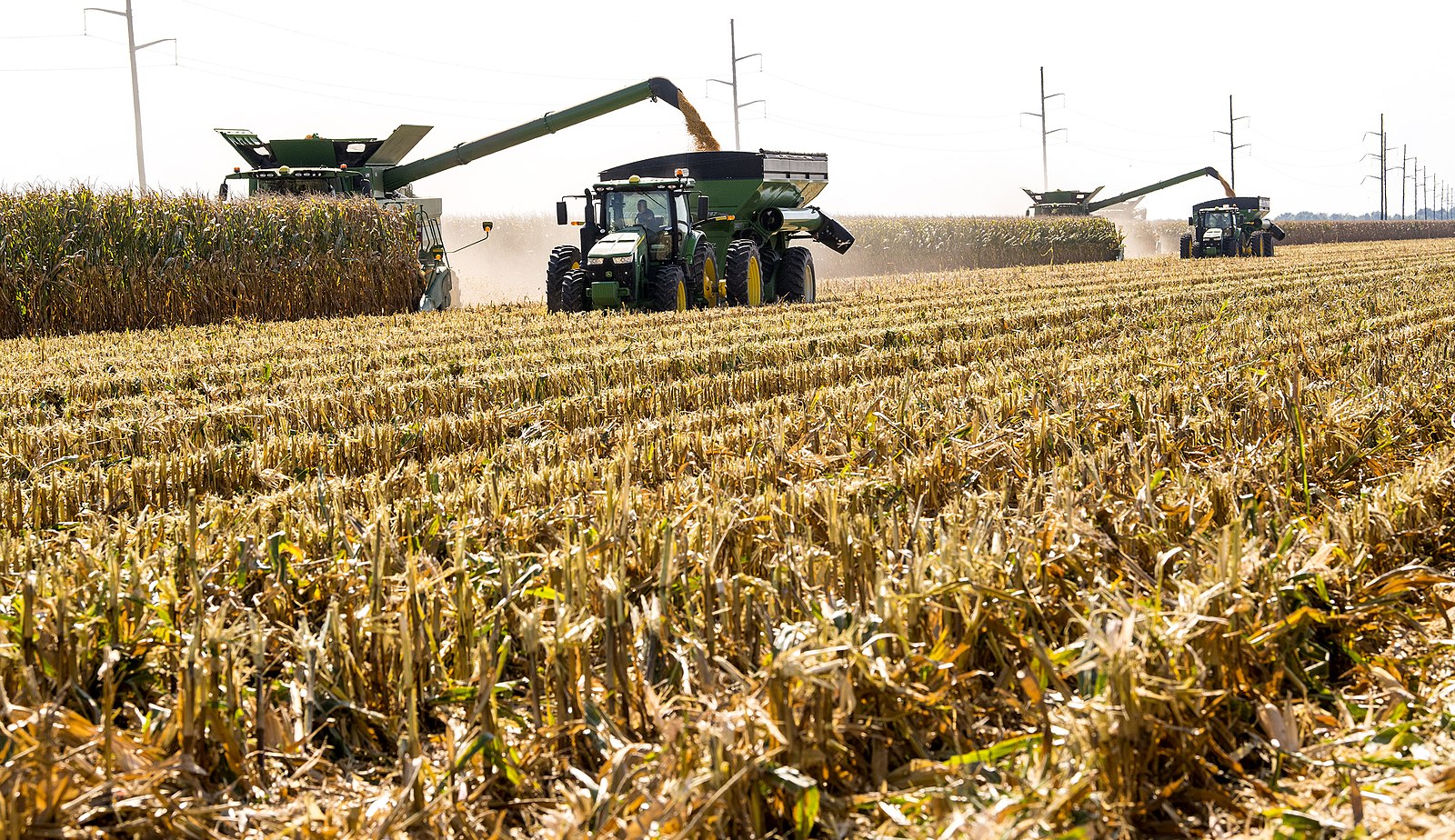
Photo Credit: Ark. Agricultural Experiment Station | Flickr | CC BY 2.0 | no changes made

The goal of most farms, regardless of size, is to optimize yields. Higher yields translate directly to improved profitability and better return on investment.
Achieving better yields isn't always about doing more or spending more. The core principle is straightforward: provide plants with what they need, when they need it, while minimizing stress and competition.
The best place to start is to optimize existing practices and address the limiting factors that are hindering production. When combined, minor improvements across different areas can add up to substantial yield gains.
1. Start with High-Quality Seeds
Seed quality is the foundation for everything that follows in the growing season. Investing in quality seed pays dividends throughout the growing season, making it one of the most cost-effective yield-improvement strategies available.
Deer Creek’s high-quality seeds possess strong genetics, excellent germination rates, and freedom from seed-borne diseases and contaminants. Beyond offering quality seed, our experts can help you select varieties tailored to your specific goals and growing conditions.
Starting with the right seed from a trusted source sets your crop up for success from day one.
2. Select Varieties Matched to Your Conditions
Hand in hand with buying high-quality seed is choosing varieties that are developed for your climate, soil type, local disease pressures, and production system.
Modern plant breeding has produced remarkable diversity, giving you a range of varietal options to meet your needs.
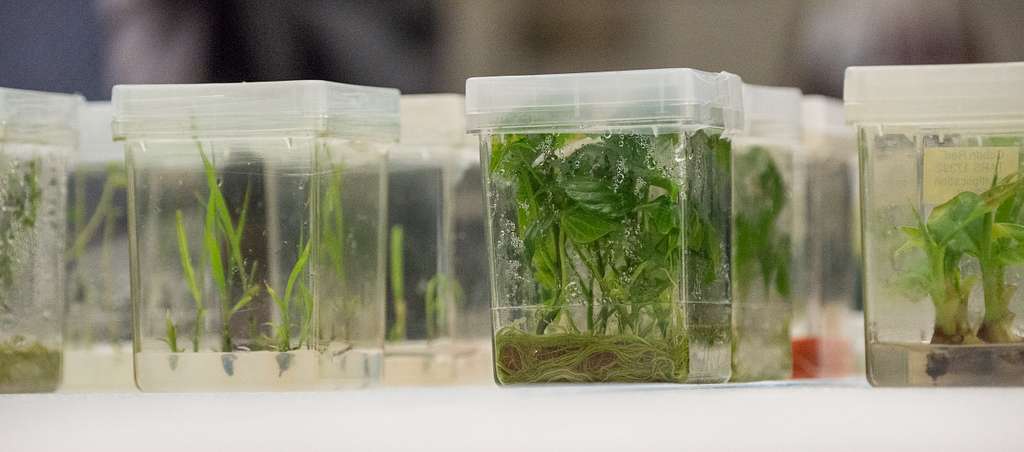 Traits like drought tolerance or heat resistance provide insurance against variable weather. Shorter-season varieties provide maturity insurance in areas with unpredictable late-season weather or can help guarantee maturity when early-season challenges delay planting.
Selecting varieties resistant to the diseases prevalent in your area can help reduce yield loss and decrease the need for fungicide applications.
3. Perfect Your Planting Timing and Technique
Planting at the optimal time ensures your crops experience the most favorable conditions during critical growth stages. You have to find that “just right” balance.
Early planting is helpful because it takes advantage of spring moisture and gives crops plenty of time to mature before late-season heat or drought stress. The downside, though, is that soil temperatures are lower. Planting into cold, wet soil increases disease risk, often resulting in poor stand establishment.
Planting later in the spring means soil temperatures are higher, and disease risks are lower. But you may expose crops to heat stress during pollination, or shorten the growing season, risking maturation.
Most crops have relatively narrow ideal planting periods, but you need to be flexible as weather conditions evolve. The trick is to make sure you have your equipment ready to go and have all your inputs already. Then watch the weather data and monitor your soil temperatures so you can plant as soon as the window opens.
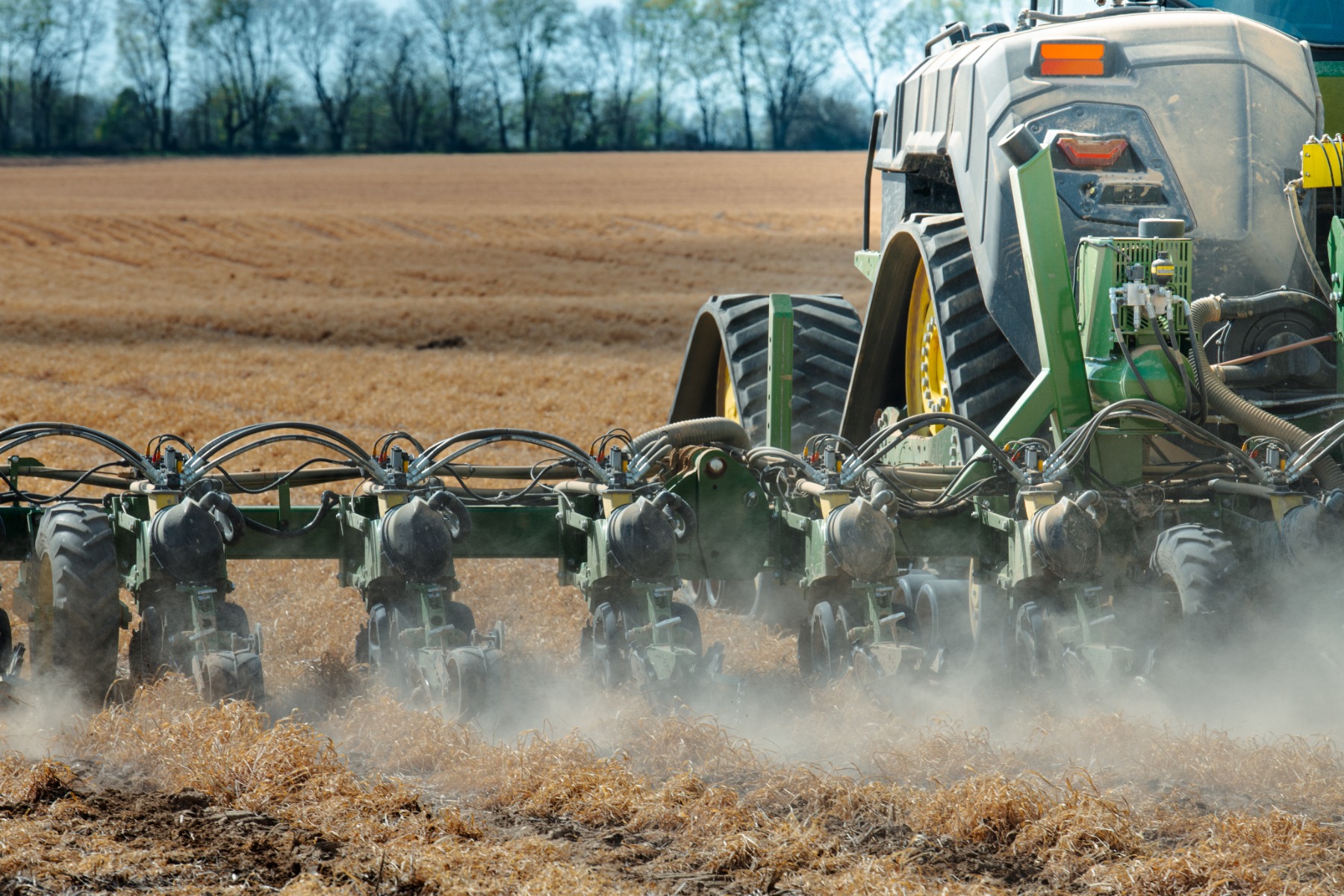 Photo Credit: U.S. Department of Agriculture | Flickr | PDM 1.0 | no changes made
Along with correct timing, also focus on planting technique.
- Setting your planter at the proper seed depth ensures good seed-to-soil contact and helps minimize emergence problems.
- Appropriate plant populations optimize resource competition between plants. If there are too few plants in a field, you aren’t taking full advantage of the available light, water, and nutrients, potentially leaving yield on the table. But too many plants create intense competition. You’ll see reductions in productivity, and dense canopies have increased disease pressure.
- Keep row spacing within the recommended guidelines for your crop. Proper spacing impacts light interception, weed competition, and harvest efficiency. When kept on the narrower side of guidelines, you’ll see faster canopy closure, better weed suppression, and possibly improved light interception.
- Equidistant plant spacing within rows ensures individual plants share resources equally.
4. Optimize Soil Health and Fertility
Healthy, fertile soil is the foundation for crop growth. It provides physical support for roots while supplying water, nutrients, and beneficial organisms your crops need. Poor soil conditions create stress that limits yields regardless of other management practices.
Understanding current nutrient levels, pH, and organic matter content allows you to address issues or deficiencies precisely instead of following a generic strategy that might not address problems and waste money.
- Deficiencies in even a single nutrient can substantially limit yields, while excessive applications waste money and may create environmental problems.
- Many essential nutrients become unavailable to plants when pH strays outside optimal ranges, effectively creating nutrient deficiencies when nutrients are present in the soil.
- Organic matter enhances water-holding capacity, supports beneficial microbial populations, improves soil structure, and provides slow-release nutrients.
Testing the soil every three years, or annually for high-value crops, provides valuable data to help make informed decisions.
5. Apply Nutrients Strategically
A key aspect of crop production is fertilization. But optimizing yields goes further than just applying plant essential nutrients. Strategic nutrient management provides crops with what they need, when they need it, avoiding excessive nutrient application.
The timing and placement of nutrients affect their efficiency and yield impact.
- Nutrients applied when crops actively need them are used more efficiently than applications made months before or after peak demand.
- Placing nutrients near roots improves plant uptake and reduces leaching.
- Split applications deliver nutrients in multiple smaller doses, often resulting in better yields than single large applications.
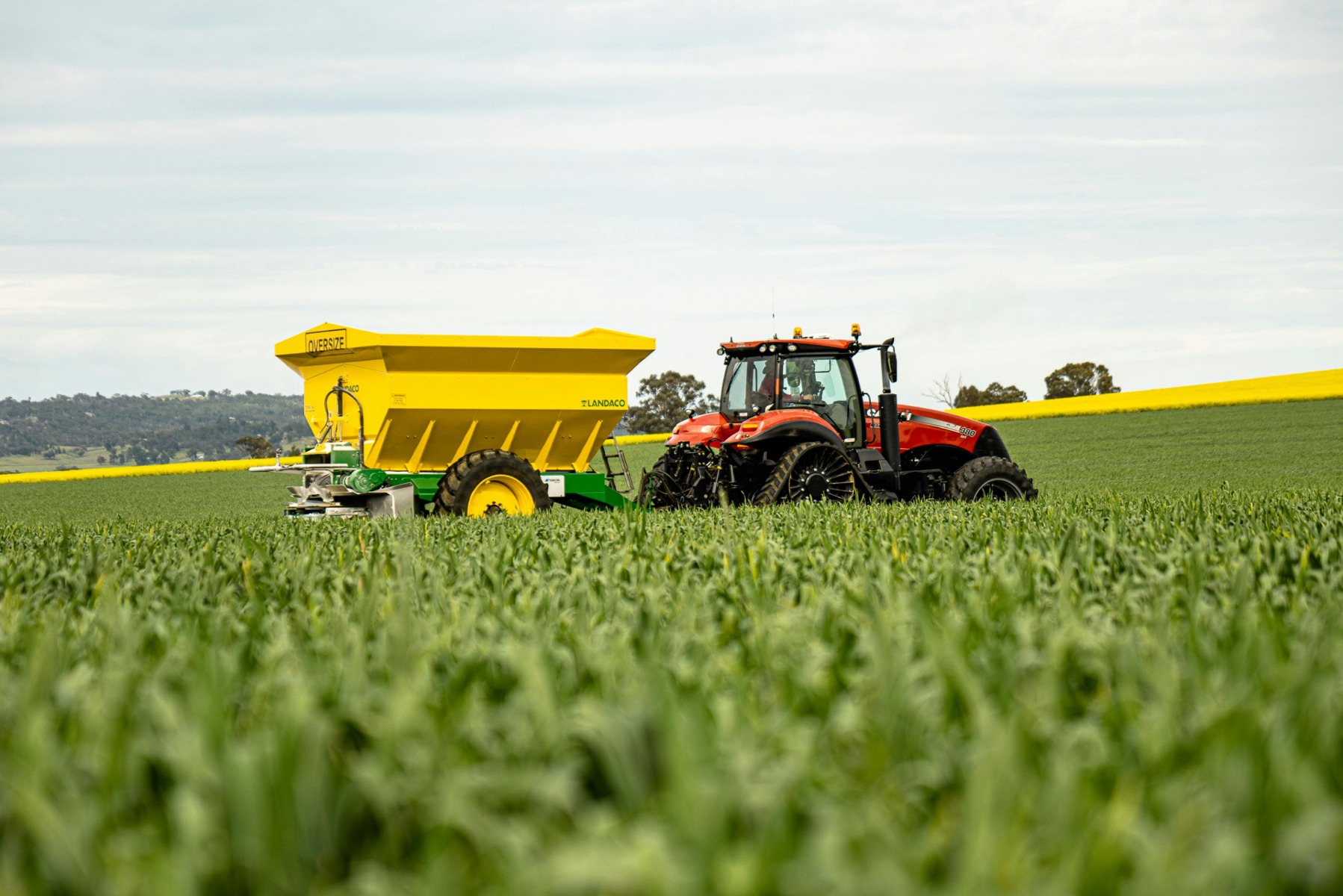 It’s also critical to understand how soil nutrients interact to prevent problems. Some nutrients interfere with the uptake of others when present in imbalanced ratios. Making sure nutrients are available in proper ratios means efficient use by your crop and maximizes yield response.
6. Manage Water Efficiently
Water typically limits yields more than any other factor. At times, it’s due to drought stress, but waterlogged soils can also reduce production, and it happens in both rainfed and irrigated systems. To substantially improve yields, it’s essential to optimize water availability.
For irrigated crops, you’ll see the best improvement in water use efficiency and yields if you move from applying water on a fixed schedule to applying it based on crop needs. Using moisture sensors and weather-based irrigation scheduling help you match water application timing and amounts to crop demand.
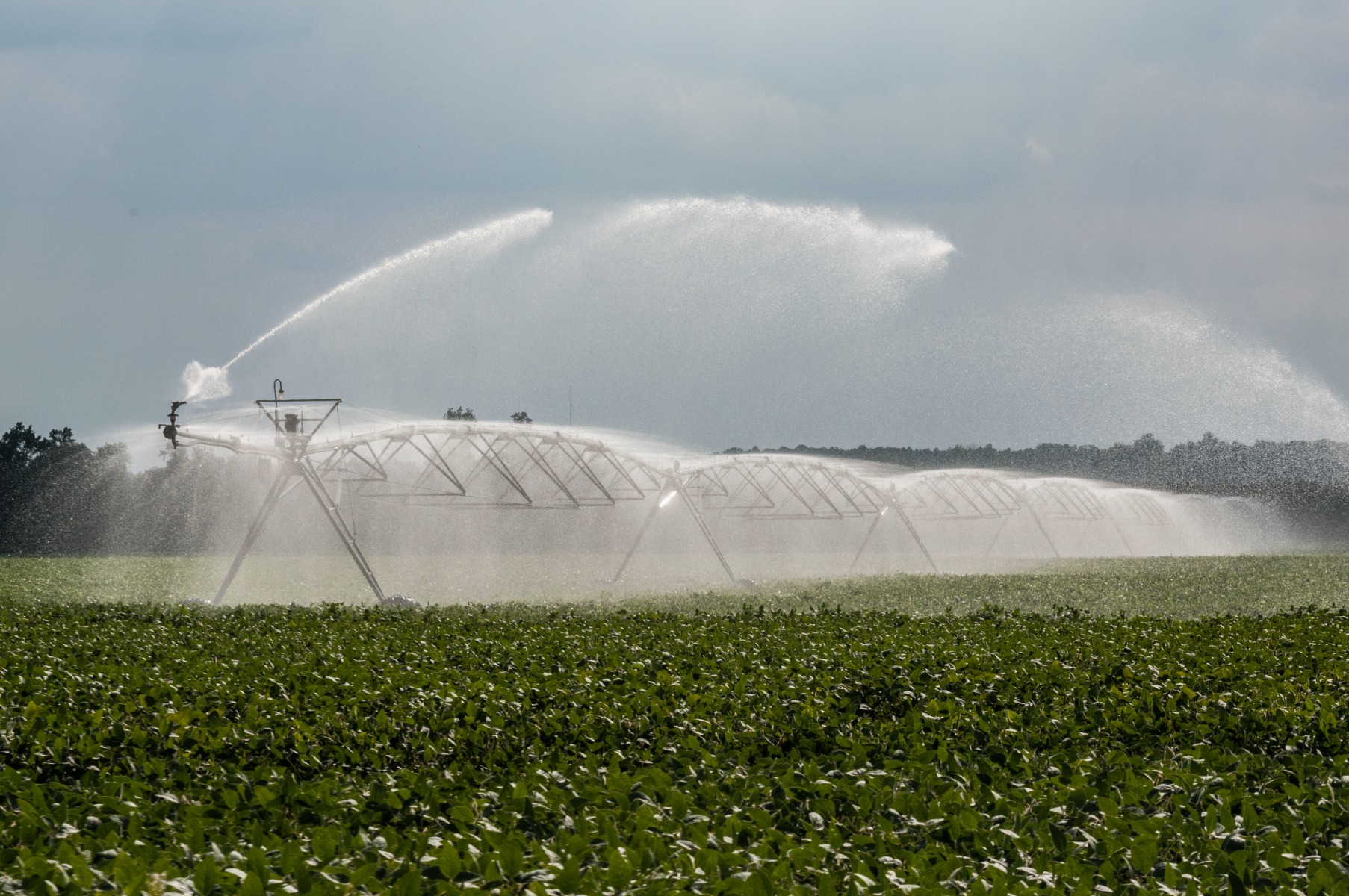 In all production systems, focus on improving soil structure and organic matter content. Doing so increases your soil’s water-holding capacity, essentially expanding its water storage capacity. Use cover crops or maintain surface residue to reduce evaporation and keep more water available for crop use.
Drainage management is also vital in areas of high rainfall or fields with poor natural drainage. Saturated soil pushes oxygen out of pore spaces, which can stress the roots, promote disease, and kill plants outright. If you’re struggling with poor drainage, installing tile drainage or managing field surface drainage can help protect your yields in wet years.
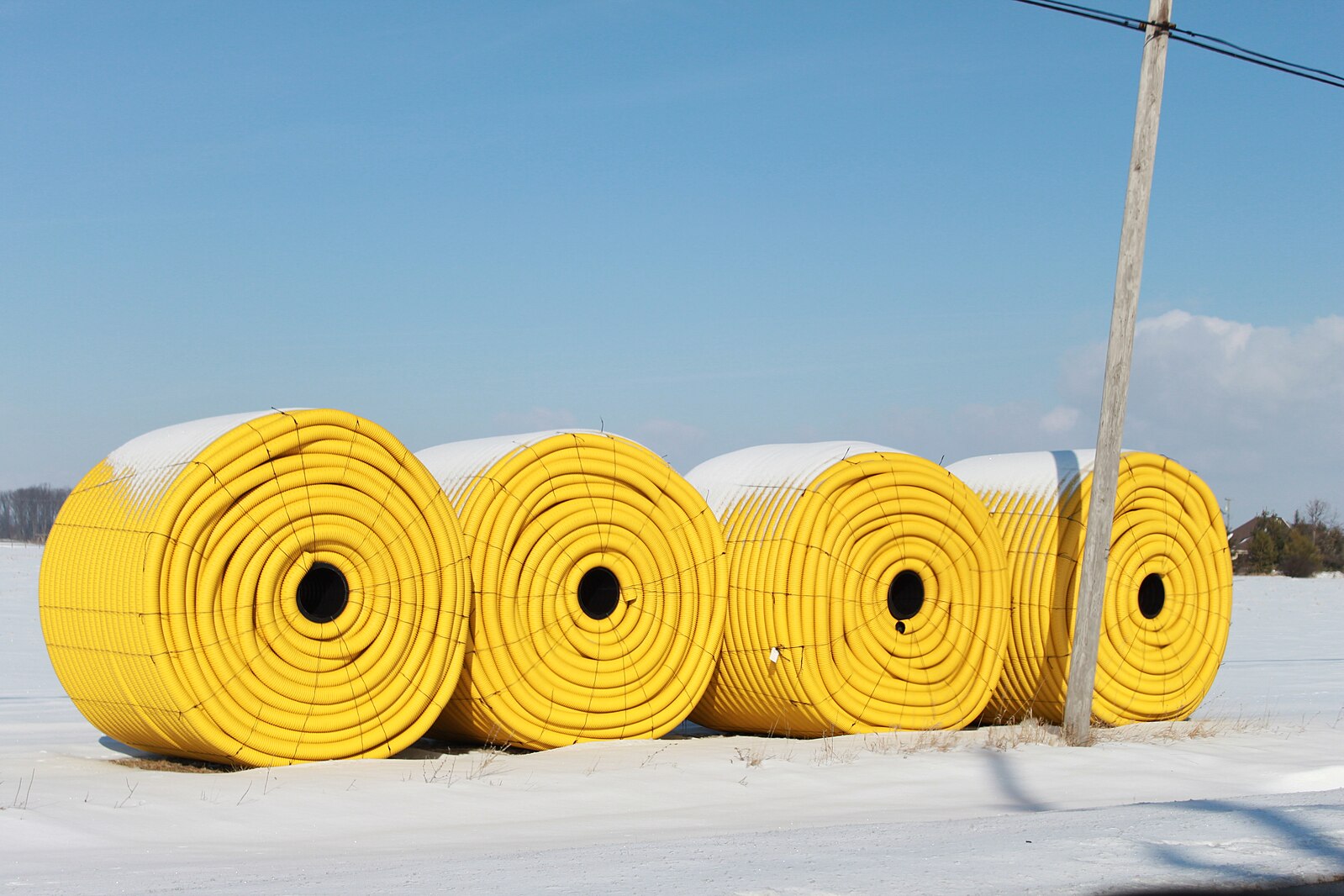 Photo Credit: Dwight Burdette | Wikimedia Commons | CC BY 3.0 | no changes made

7. Control Weeds, Pests, and Diseases Proactively
Competition from weeds, pests, and infection by pathogens all reduce yields by stealing resources, damaging plant tissues, or disrupting normal growth processes.
Early-season weed pressure during crop establishment can reduce yields by 20-50% even if weeds are eventually controlled. The effects of pest and disease damage can be similar, but are often proportional to the crop’s growth stage and infestation severity.
With the potential to limit yields, pest management becomes critical. Many producers employ integrated pest management that combines multiple tactics for more effective, sustainable pest control.
Instead of solely using chemical control, they utilize crop rotation, resistant varieties, beneficial organisms, cultural practices, and, when necessary, targeted pesticide applications. These practices work together more effectively than relying on any single approach.
Planting disease-resistant varieties, managing crop residue to reduce pathogen carryover, timing planting to avoid peak pest pressure, and maintaining crop health through good fertility and water management all minimize pest and disease problems before they start. Regular field monitoring helps determine when thresholds are reached and intervention is warranted, avoiding unnecessary treatments while catching problems before yield loss becomes significant.
8. Implement Strategic Crop Rotation
Growing the same crop year after year on the same field creates multiple yield-limiting problems.
Continuous monoculture, without any crop rotation:
- Depletes specific nutrients (preferentially, based on the crop)
- Builds up pest and disease populations
- Can lead to herbicide-resistant weeds
- Reduces soil biological diversity.
Strategically rotating crops through a field breaks these negative cycles while building soil health. Effective rotations include crops from different plant families with varying nutrient demands, root structures, and pest complexes.
Alternating between deep-rooted clovers and alfalfas, and shallow-rooted small grains and annual grasses creates varied soil structure at different depths. Including nitrogen-fixing legumes in rotation reduces fertilizer requirements for subsequent crops while building soil organic matter.
Rotations also provide natural breaks from pests and diseases. Many crop pests and pathogens are host-specific or have limited host ranges, so rotating to non-host crops interrupts pest life cycles and reduces pressure without additional control measures. This biological management becomes increasingly valuable, helping to minimize resistance to chemical controls.
9. Leverage Technology and Data
Today’s agricultural technologies help producers manage operations at levels of detail that past generations could never have predicted. Advances such as GPS-guided equipment, yield monitors, variable-rate application systems, satellite imagery, and data management platforms enable farmers to understand field variability and respond with site-specific management.
 For example, yield mapping identifies which parts of fields consistently produce well and which underperform. Producers can examine the limiting factors and target corrective actions to the underperforming areas.
Soil sampling within management zones rather than across whole fields provides more detailed fertility data and enables variable-rate applications that efficiently address specific needs.
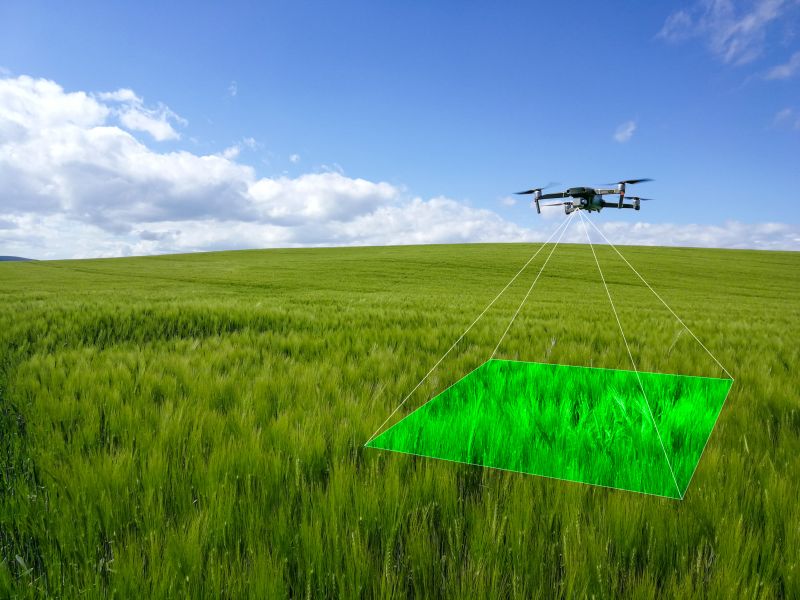
Drones and satellite imagery can detect crop stress before it becomes visible while standing in the field. This early detection of nutrient deficiencies, water stress, disease hot spots, or weed pressure allows for quick intervention that helps minimize yield loss.
Data management systems take information from these sources and help identify relationships between management practices and outcomes. When producers understand which practices worked well in which field conditions, they can continuously refine their management over time.
Moving Forward
Growing crops is an intricate process that involves many components working together. So it makes sense that no single practice can maximize yields. Instead, make sure you have sound fundamentals across all aspects of production. That creates the conditions for crops to reach their full potential.
Take a look at your operation and identify the most limiting factors. Address those first, then refine other management practices. Over time, consistent attention will lead to higher yields, improved profitability, and more sustainable operations.
Additional Resources
- For more info on IPM, listen to UC IPM scientist Pete Goodell talk about its scientific basis.
- Need extra help with your soil test results? The University of Illinois Urbana-Champaign Extension explains how to interpret them.
- Iowa State University Extension and Outreach has helpful information if you’re looking to get started with cover crops.
- SARE offers seven specific management scenarios that showcase what you can do to achieve faster returns on your cover crop investments.