

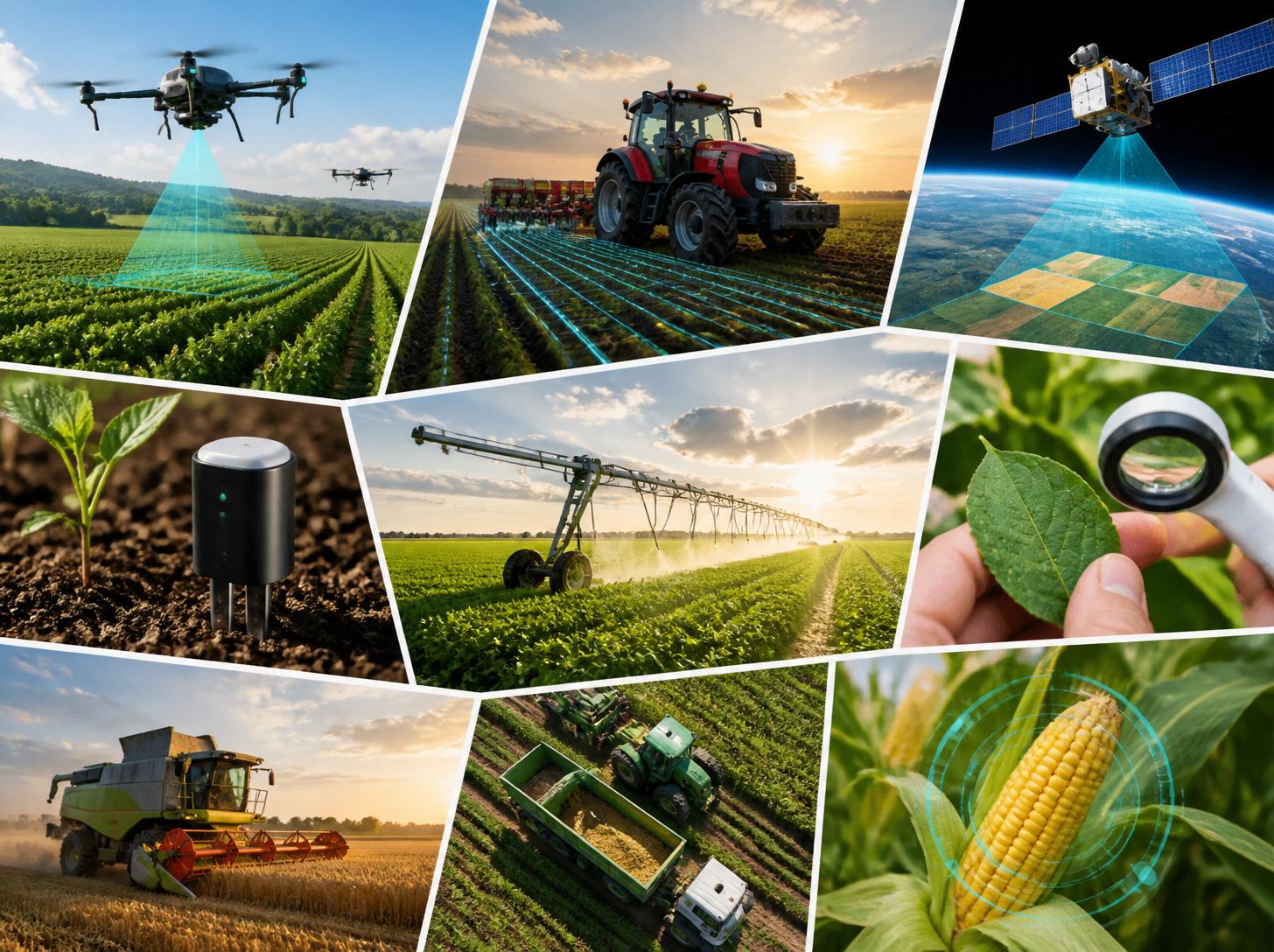
Not that long ago, "agricultural technology" meant the latest tractor model or a better sprayer. Today, precision agriculture tools include drones mapping your fields from 400 feet up, satellites tracking crop health, and soil sensors sending real-time moisture data straight to your phone.
The good news? A lot of ag tech tools aren’t just for large-scale commercial farms. With time, prices have come down, platforms have gotten easier to use, and plenty of options now make sense for farms of all sizes.
The basic idea behind new technologies is simple: better information helps you make better management decisions.
Whether you're catching a nutrient problem before symptoms hit your yield, dialing in your irrigation timing, or spotting pest pressure early enough to do something about it, ag tech gives you information beyond what you can see standing in the field.
That said, using technology just to use it isn't the goal. The right question isn't "what's the newest tool?" It's "what problem am I trying to solve?"
Is Ag Tech Right for You?
Before investing in any ag technology, it helps to think through a few questions first.
What's your biggest management headache?
Uneven stands? Inconsistent yields from one end of a field to the other? Trouble timing your irrigation? Pest pressure that seems to show up overnight?
Different problems call for different solutions. Identifying what's actually costing you in yield, inputs, or time points you toward the technology that delivers real value.
Will the numbers work?
Every technology purchase is an investment. To be financially worthwhile, it needs to pay you back through:
- Higher yields
- Lower input costs
- Less labor
- Better risk management
Some tools have a fast ROI. GPS guidance systems, for example, show measurable savings in fuel and inputs almost immediately. Others are harder to quantify but still valuable, like having better field data to make smarter planting decisions.
How does it fit with what you already use?
Technology that plays well with your other systems is worth more than tools that create data silos. Look for platforms where information flows seamlessly between systems without a lot of manual effort.
Are you ready for the learning curve?
A new technology takes time to learn. Not just the tool itself, but also how you interpret the data and use it. Make sure you factor that into your timeline and adjust your expectations.
Start Small and Solve One Problem First
One of the biggest misconceptions about ag technology is that you need to adopt everything at once.
In reality, the most successful technology investments often start with a single tool that addresses a specific problem.
If uneven fertility is limiting yield, improved soil sampling and variable-rate fertilizer applications may offer the biggest return.
If irrigation timing is a challenge, soil moisture sensors could be the place to start.
If operator fatigue and input overlap are costing time and money, GPS guidance may deliver the quickest payback.
The goal isn't to build the most advanced technology stac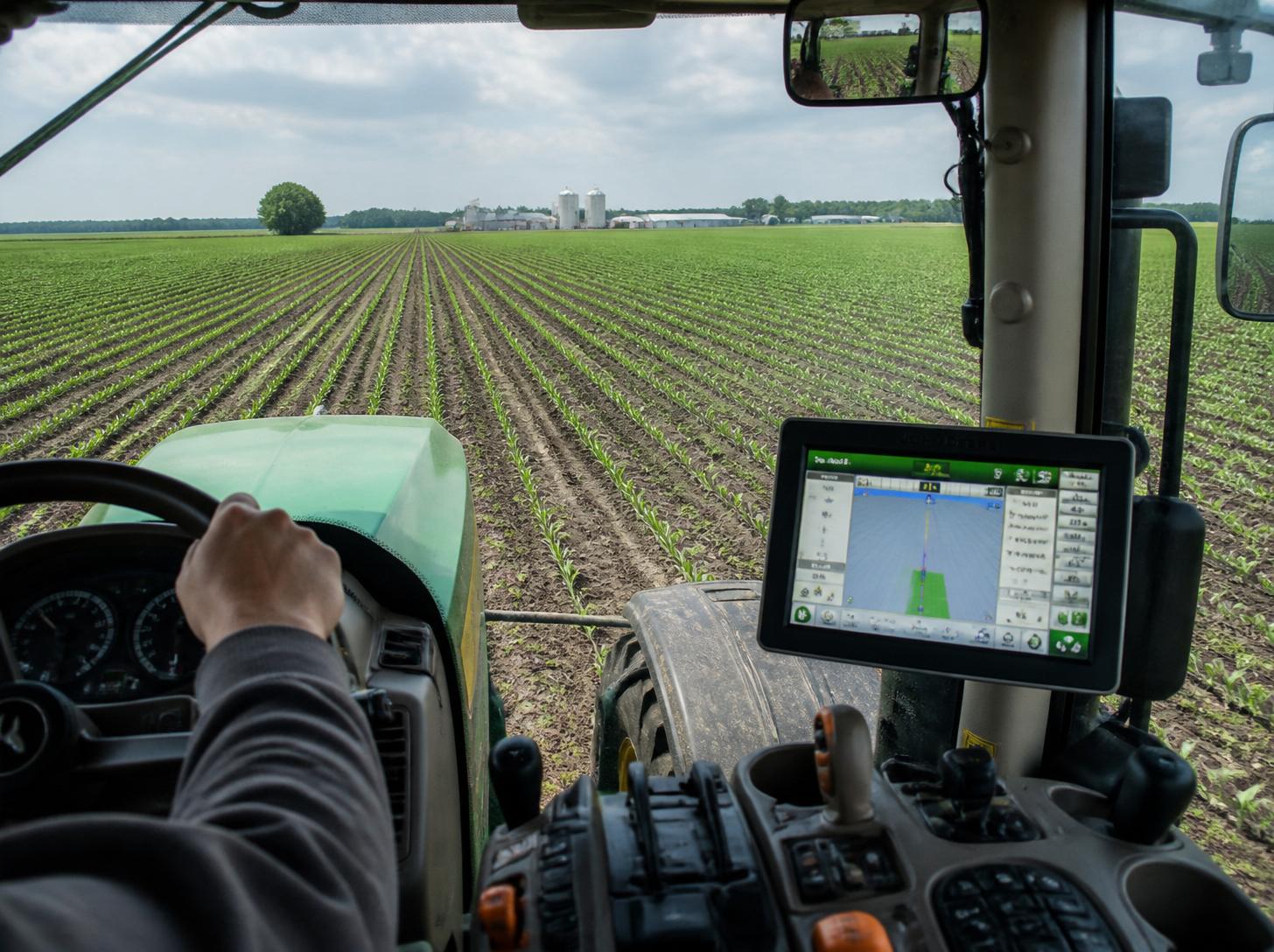 k possible. The goal is to solve real problems and improve decision-making one step at a time.
With that in mind, let's look at some of the most common ag technology tools available today.
GPS and Guidance Systems
If there's one technology that's become almost standard equipment on modern farms, it's GPS-based guidance systems. Auto-steer was cutting-edge not that long ago. Now it's baseline.
Guidance systems reduce overlap on every pass, regardless of the work you’re doing. That delivers real, measurable benefits:
- Less wasted seed, fertilizer, and fuel
- Reduced operator fatigue on long days
- Better accuracy when working at night or in low-visibility conditions
- Controlled traffic patterns that help reduce soil compaction over time
The ROI here is usually one of the easier ones to calculate, which is why GPS guidance tends to be one of the first technology investments farms make.
Variable Rate Technology
Variable rate application is one of the core tools of precision farming, taking GPS guidance a step further. Instead of applying the same rate of seed, fertilizer, or lime across an entire field, variable rate technology lets you match application rates to actual conditions in different zones.
Think about how fields vary. One corner might have heavier soil that holds more nutrients. Another spot might have a pH problem that limits what plants can take up. A low-lying area might establish stands differently than a well-drained slope.
Treating all of that the same wastes inputs in some spots and underserves others.
For pasture operations, variable rate lime application is a particularly practical use case. pH variability is common in pastures, and it's one of the biggest limiters of forage productivity. Targeted correction based on actual soil data helps you get more out of your fertility program.
And for pH-sensitive forages like alfalfa and clovers, getting that pH right can make the difference between a stand that struggles and one that thrives.
Remote Sensing and Imagery
Remote sensing gives you an aerial view of what's happening across your fields. It often reveals patterns that are completely invisible from the ground.
Satellite imagery
services have become much more accessible and affordable in recent years. These systems provide regular images throughout the growing season and can flag a range of developing problems, including:
- Nutrient deficiencies
- Disease pressure
- Drainage issues
- Pest damage
The whole point is catching these issues early enough that there's still time to respond.
For pasture managers, satellite imagery takes a lot of the guesswork out of grazing decisions. Instead of eyeballing a paddock, you get an objective read on forage biomass across your whole operation. You can see which paddocks are ready, which ones need more rest, and where you might be running short before it becomes a problem.
The most commonly used measurement is NDVI (Normalized Difference Vegetation Index), which tracks plant health and stress across your fields. More refined tools like NDRE (Normalized Difference Red Edge) offer even sharper sensitivity to what's actually going on with your crop.
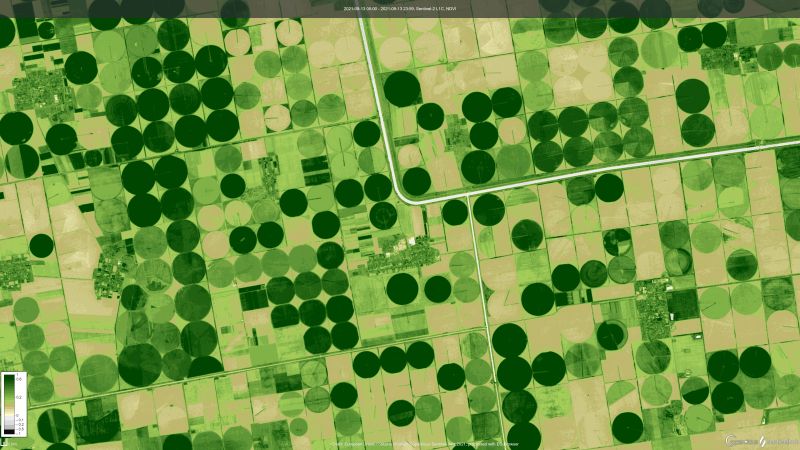 Image Source: Tomch olha | Wikimedia Commons | CC BY 4.0 | no changes made

According to Alabama Cooperative Extension, indices like NDRE and the Chlorophyll Content Index (CCI) are more appropriate when you're specifically monitoring nutrient levels, while NDVI gives you the big-picture plant health view.
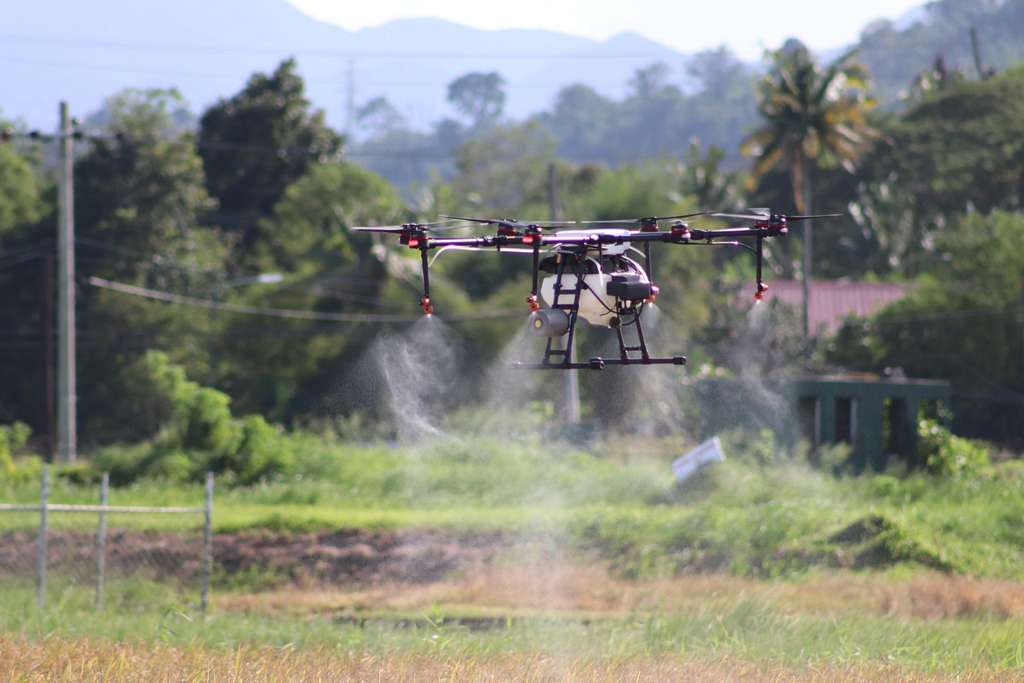
Drones
Give you higher resolution than satellites and let you fly on your schedule, not a satellite's fixed pass times. Equipped with multispectral or thermal cameras, drones can help identify:
- Water stress
- Stand issues
- Disease or pest pressure
- Canopy temperature variation
A common workflow: satellite imagery flags a potential problem area, then a drone flight gives you a close-up look at exactly what's going on and how widespread it is before you decide how to respond.
Soil and Weather Monitoring
Understanding conditions on the ground, in real time, helps you time decisions better and avoid costly mistakes.
Soil moisture sensors installed at different depths give you a continuous read on moisture through the root zone.
For irrigated operations, this prevents both under- and over-watering, saving energy costs and protecting yield. University of Minnesota Extension recommends irrigating to replenish soil moisture to about 85% of field capacity. This is enough to meet crop needs while leaving room for rainfall.
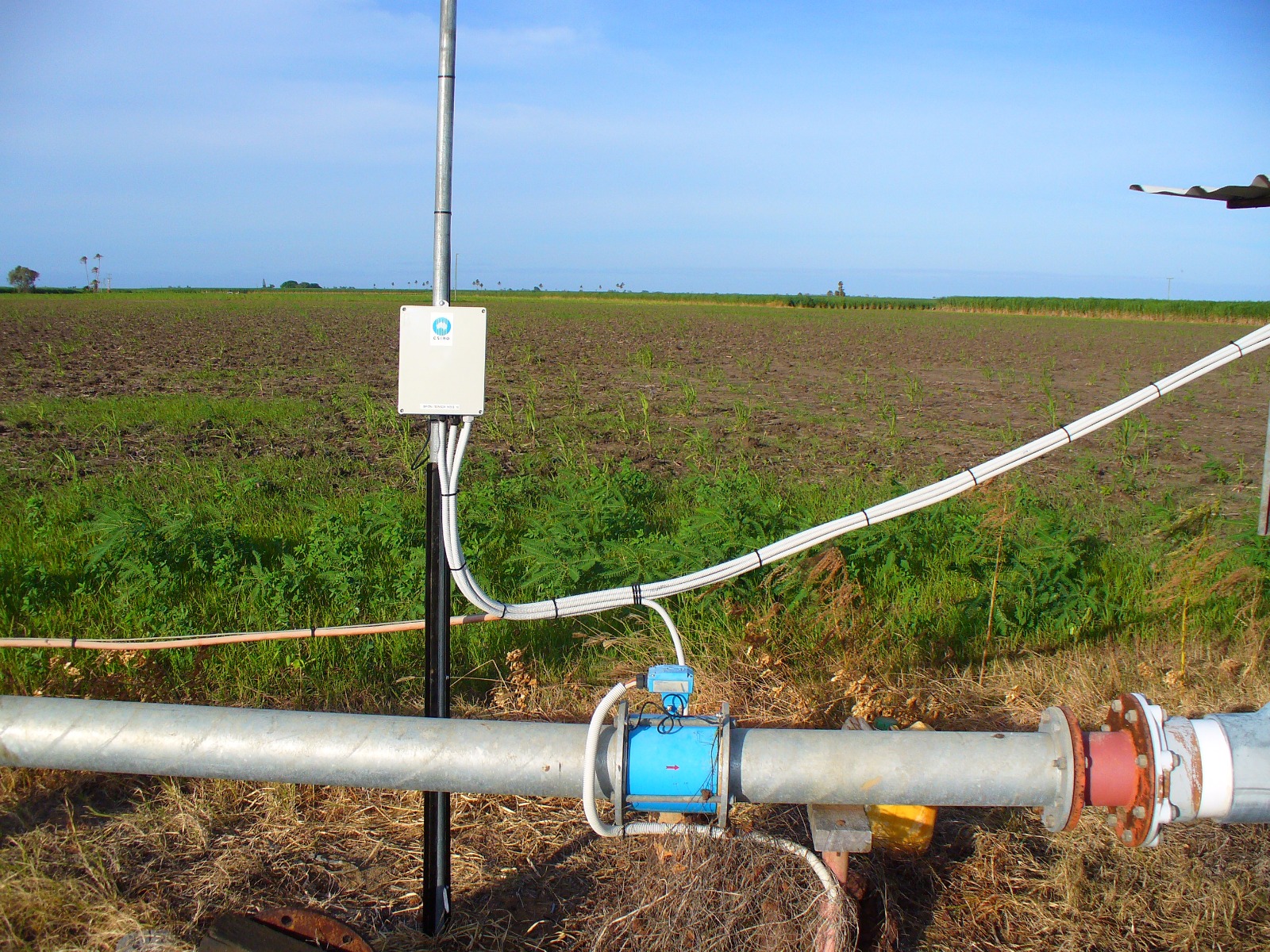 Image Source: File Upload Bot (99of9) | Wikimedia Commons | CC BY 3.0 | no changes made

In dryland situations, knowing your soil moisture profile helps inform planting decisions and variety selection based on what water is actually available.
For pasture operations, this type of pasture technology is especially useful before you decide whether to graze a paddock. Grazing wet soils causes compaction that can set back long-term productivity, and the damage can be significant.
Mississippi State University Extension reports that annual yield losses from severely compacted pasture soils can range from 20 to 40 percent, with the worst damage occurring when soils are grazed wet. Having soil moisture data takes the guesswork out of that call.
On-farm weather stations
collect data specific to your location instead of using info for the nearest town or airport. That includes:
- Rainfall totals
- Temperature highs and lows
- Humidity levels
- Wind speed and direction
- Solar radiation
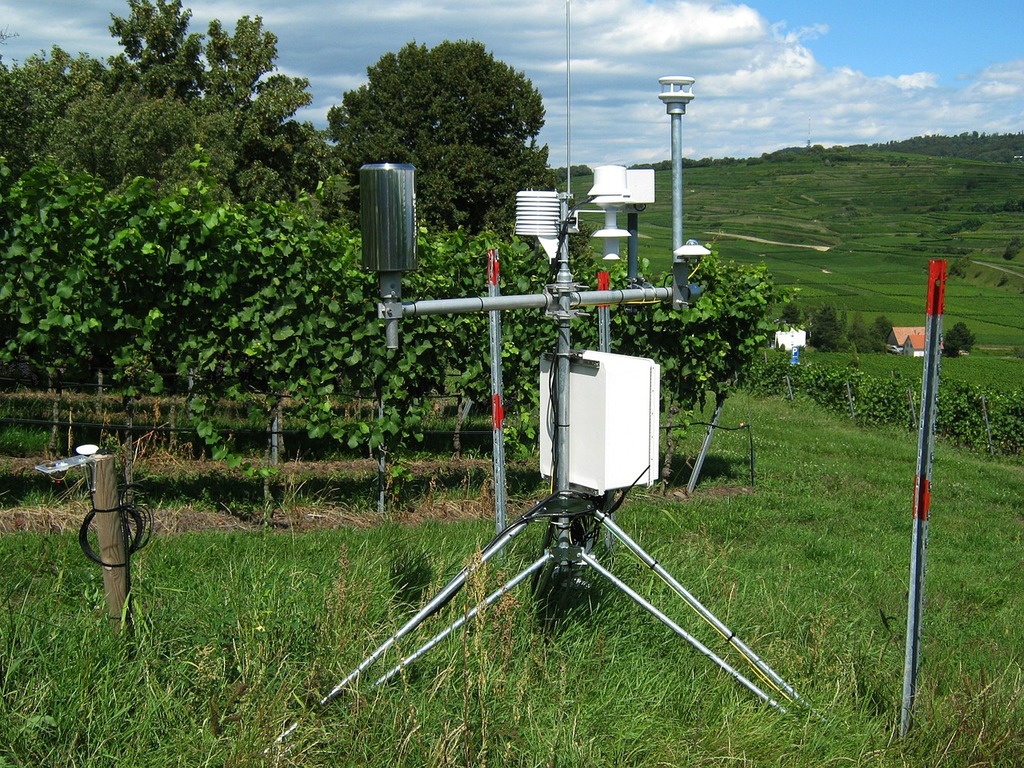
That localized data sharpens spray timing decisions, helps you assess disease risk, and improves irrigation scheduling. Some systems also layer in predictive models that forecast pest emergence or disease pressure before it shows up visually.
Yield Monitoring and Data Management
Yield monitors on combines and forage harvesters collect detailed production data across your fields, building maps that show you exactly where you're producing. And pinpoint where you're not.
Over time, that data becomes one of your most valuable management tools. It helps:
- Identify problem areas that consistently underperform
- Guide where to focus your soil sampling dollars
- Evaluate whether a management change actually worked
- Build the foundation for variable rate programs based on real history
It’s recommended to pair yield map data with soil tests and scouting notes to get the full picture. That way you can make sure the decisions you base on that data are actually grounded in what's driving production differences in your fields.
Farm management information systems (FMIS) pull data from yield monitors, soil tests, weather stations, imagery, and application records and store it in one place. That makes it easier to spot connections between inputs, practices, and outcomes that would otherwise stay buried in separate spreadsheets or paper records.
Grazing Technology and Livestock Management
Pasture-based operations have their own growing set of tools worth knowing about.
Grazing management software helps you build and adjust rotational grazing plans based on forage growth rates, animal needs, and rest periods. These platforms can help answer questions like:
- When should cattle be moved to the next paddock?
- Which paddocks need more recovery time?
- How much forage is available across the operation?
- Will supplemental feed be needed before the next rotation?
When weather or growth rates shift mid-season, you can adjust the plan dynamically instead of just reacting.
The potential upside of managed grazing is well documented. University of Minnesota Extension research shows that intensive rotational grazing systems can produce 30 to 50 percent more forage per acre compared to continuous grazing.
That's not a marginal gain. It's the kind of difference that shows up in your bottom line. The results are even more achievable when the right hay and pasture mixture or perennial grasses are backing up your grazing plan.
Remote livestock monitoring ranges from trail cameras to collar-based systems that track individual animal location, activity, and sometimes physiological indicators. For larger operations spread across significant acreage, these tools can:
- Reduce labor spent checking remote pastures
- Alert you to unusual behavior or potential health issues earlier
- Help you stay connected to your herd without being on horseback every day
Start with Strong Genetics
Here's something worth keeping in mind as you build out your technology stack: the most sophisticated precision agriculture system in the world can't overcome a poor variety choice or low-quality seed.
Modern seed genetics increasingly include traits that work hand-in-hand with precision management:
- Uniform emergence for consistent stands
- Nutrient use efficiency that responds well to variable rate programs
- Stress tolerance for tougher environments and unpredictable seasons
Getting the genetics right means your technology investments have something to work with. Strong genetics and smart technology work together. One without the other leaves yield on the table.
At Deer Creek Seed, we take variety selection seriously. We look at how different seeds perform under precision management practices — whether you're establishing a new pasture with variable-rate seeding, planting cover crops to build soil health, or selecting forages for a technology-managed grazing system.
Have questions about which varieties make sense for your operation? Our team is happy to talk through it. Reach out to Deer Creek Seed and let's build a plan that makes your technology investments count.
Additional Resources
- University of Nebraska–Lincoln Extension has a thorough breakdown of satellite-based auto-guidance systems and what to consider when choosing one for your operation.
- Understanding field variability is the foundation of any variable rate program. University of Florida IFAS Extension covers the core concepts and components of VRT, while Purdue Extension digs into the practical differences between map-based and sensor-based approaches.
- Not all vegetation indices measure the same thing. Alabama Cooperative Extension breaks down which indices to use for different situations.
- If you're just getting started with satellite imagery, South Dakota State Extension has a beginner-friendly overview of aerial imagery types and how they're used in crop assessment.
- University of Minnesota Extension walks through sensor types, installation, and how to use the data for irrigation scheduling decisions.
- Oklahoma State Extension covers how to interpret sensor readings and translate them into practical irrigation decisions.
- Cornell University CALS looks at the long-term, slow-moving nature of pasture compaction and why it's easy to miss until real damage is done.
- NDSU Extension covers how to collect, clean, and actually use yield map data to improve management decisions.
- For help designing a rotational grazing system that fits your operation, Virginia Tech Extension offers detailed guidance on stocking density, paddock design, and rest periods.