


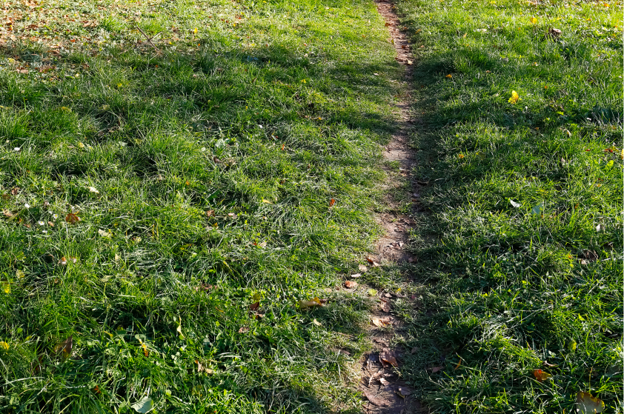
Every property seems to have one.
Maybe it's the path from the driveway to the front door. Perhaps it's the area around the barn where chores happen twice a day, every day. It could be the stretch along a fence line, beside a garage, or near a livestock gate where constant foot traffic has worn away every blade of grass.
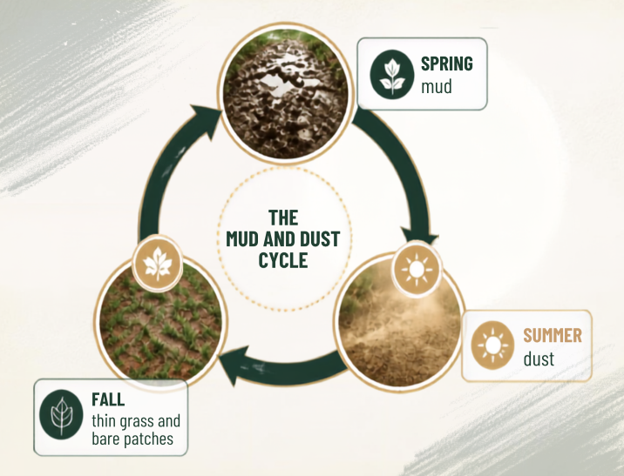
No matter where it is, the result is usually the same: mud in the spring, dust in the summer, and bare dirt nearly year-round.
Many homeowners and acreage owners assume the solution is simple, just throw out more grass seed. Yet after a few weeks, the new grass disappears and the problem returns.
The reality is that high-traffic areas aren't suffering from a grass seed shortage. They're suffering from a wear-and-compaction problem. To successfully restore these locations, you need a rehabilitation strategy that addresses the underlying causes and utilizes turfgrass mixtures capable of withstanding real-world use.
If you're tired of fighting recurring bare spots around your home, outbuildings, or livestock facilities, here's how to diagnose the issue, and fix it for good.
The Real Problem Isn't Bare Dirt
Bare dirt is actually a symptom.
The underlying issue is usually repeated traffic combined with soil compaction.
According to University of California Cooperative Extension research, heavy foot and vehicle traffic damages turf through both physical wear and soil compaction. Wear crushes grass leaves and crowns, while compaction restricts root growth and reduces the turf's ability to recover from stress. Over time, the grass weakens and eventually dies out.
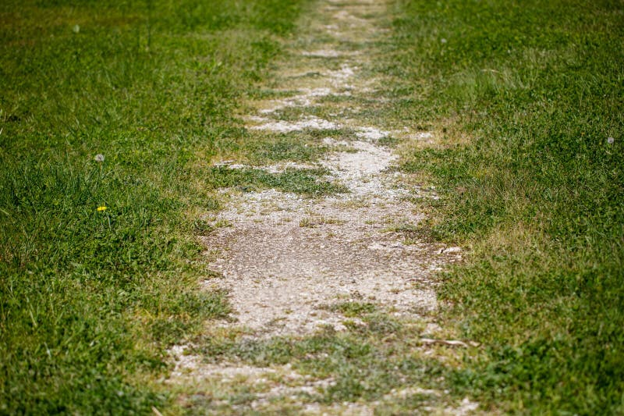
In practical terms, every trip across a lawn creates a small amount of stress. A few trips aren't a problem. Hundreds or thousands of trips over the same path create conditions where even healthy grass struggles to survive.
Common high-traffic trouble spots include:
- Walkways between buildings
- Areas around garages and sheds
- Barn entrances
- Livestock feeding areas
- Gate openings
- Dog runs
- Mailbox paths
- Playground zones
- Utility access routes
- Frequently traveled shortcuts
These locations experience concentrated traffic day after day, season after season. Eventually, the grass simply loses the battle.
Why Spring Turns Bare Areas Into Mud Pits
One of the first signs of a traffic problem appears during spring thaw.
When snow melts or spring rains arrive, water naturally seeks the easiest path into the soil. In healthy turf, root channels and soil pores allow moisture to infiltrate efficiently. In compacted soil, those pathways have largely disappeared.
Research from UMass Extension notes that compaction decreases pore space, reduces water infiltration, limits soil oxygen, and increases water retention near the surface. The result is areas that remain wet longer and are more susceptible to further damage from traffic.
The situation becomes even worse around barns and outbuildings where traffic continues despite wet conditions.
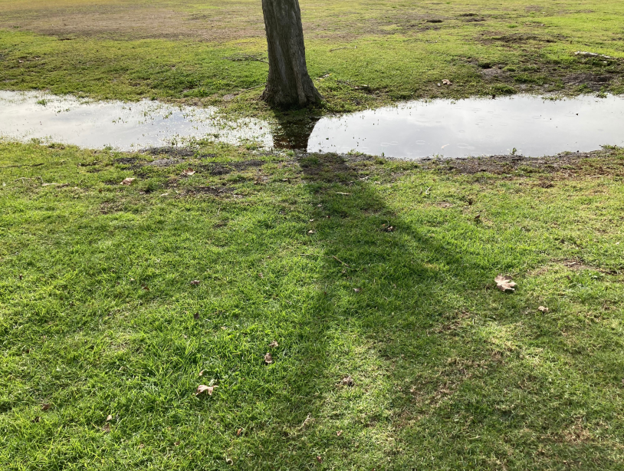
Every footprint, tire track, or hoof print pushes soil particles together more tightly. Instead of soaking in, water puddles on the surface.
Soon the area becomes:
- Slick
- Sloppy
- Difficult to mow
- Unsightly
- Vulnerable to erosion
Many property owners attempt to seed these areas while they're still muddy, but without improving soil conditions, even successful germination may not last.
Why Those Same Areas Become Dusty in Summer
By midsummer, the exact opposite problem often appears.
As temperatures rise and rainfall decreases, bare soil dries rapidly. Without grass cover, sunlight directly strikes the ground, causing moisture to evaporate quickly.
UMass Extension further notes that compacted soils can warm faster and promote higher soil temperatures during summer, slowing root growth and creating stressful growing conditions for turfgrass.
Without vegetation protecting the surface:
- Soil dries faster
- Dust develops more easily
- Wind erosion increases
- Surface temperatures rise
- New seedlings struggle to establish
The result is a frustrating seasonal cycle:
Spring = mud
Summer = dust
Fall = thin grass and bare patches
Then the process starts over again next year.
Signs Your Soil Is Compacted
Compaction is often the hidden culprit behind persistent bare spots.
The University of Vermont Extension identifies several warning signs of compacted turf areas, including hard soil, standing water, poor infiltration, sparse grass growth, and difficulty digging into the soil.
You may be dealing with compaction if you notice:
Water Pools After Rain - Instead of soaking in, water remains on the surface.
Grass Looks Thin or Weak - Turf may appear pale, patchy, or stunted.
Soil Feels Extremely Hard - A screwdriver, stake, or shovel is difficult to push into the ground.
Tire Tracks Persist - Ruts remain visible long after traffic has passed.
Weeds Take Over - Compacted soils often encourage weeds that tolerate poor growing conditions better than turfgrass.
If several of these symptoms exist together, soil rehabilitation should be part of your restoration plan.
Why Standard Lawn Seed Often Fails
One of the most common mistakes homeowners make is treating high-traffic areas the same as the rest of the lawn.
Most general-purpose lawn seed is selected primarily for appearance. While these products can produce beautiful turf under average conditions, they aren't necessarily designed to withstand constant wear.
According to turfgrass specialists at UMass and the University of California, areas exposed to repeated traffic require grasses with strong wear tolerance and recovery potential. Traffic stress reduces shoot density and vigor while increasing the likelihood of turf loss.
That means a premium lawn mix that performs well in the middle of the yard may struggle near:
- Driveways
- Walkways
- Gates
- Barns
- Work areas
High-traffic locations require grasses specifically selected for durability and recovery.
In other words, these areas need rehabilitation mixes—not just ordinary lawn seed.
Step 1: Address Drainage Before Seeding
Before putting down seed, spend time improving site conditions.
If water continually collects in the area, consider:
- Filling depressions
- Improving grade
- Redirecting runoff
- Installing French drains where necessary
- Extending downspouts away from traffic zones
Even durable turfgrass struggles when roots sit in saturated soil.
Correcting drainage issues first often dramatically improves long-term seeding success.
Step 2: Relieve Soil Compaction
When compaction is severe, the soil must be physically loosened.
The LSU AgCenter identifies core aeration as one of the most effective methods for relieving turf compaction. By removing plugs of soil, aeration creates openings that allow air, water, and roots to penetrate deeper into the soil profile.
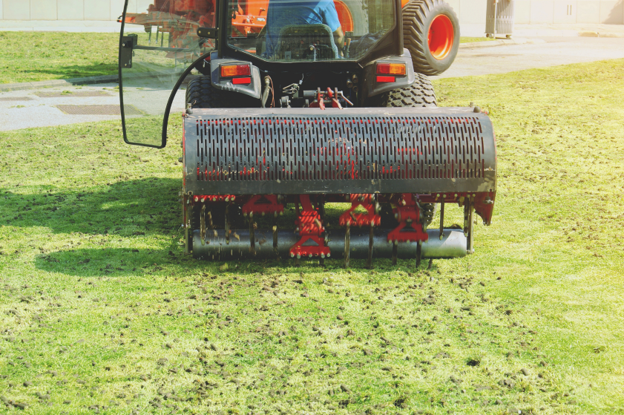
Options include:
Core Aeration - Best for established lawns with thinning turf.
Mechanical Loosening - Useful when areas are mostly bare.
Topdressing - Adding quality topsoil or compost can improve soil structure and seed-to-soil contact.
Organic Matter Additions - Colorado State Extension recommends incorporating organic matter to improve heavily compacted soils and promote better root development.
The goal is creating an environment where roots can grow—not just survive.
Step 3: Choose a Tougher Turf Mix
Once the site is prepared, the next step is selecting a seed mixture capable of handling ongoing use.
This is where many property owners see the greatest improvement.
Most homes and farmsteads have varying light conditions.
Areas near garages, homes, machine sheds, mature trees, and barns often receive partial shade for part of the day and full sun during other periods.
A quality Sun & Shade Turf Mix is designed to perform across these changing environments while providing the durability necessary for everyday traffic.
Ideal uses include:
- Around homes
- Along sidewalks
- Near garages
- Around sheds
- Mixed-light lawn areas
- Frequently traveled pathways
Rather than trying to match sunlight conditions with multiple seed products, a Sun & Shade blend provides flexibility while still producing dense, attractive turf.
For locations receiving abundant sunlight throughout the day, Sunny Turf Mix offers another reliable solution.
Full-sun areas frequently experience greater heat stress, increased drying, and heavier recreational use.
Sunny Turf Mix is well suited for:
- Barn surroundings
- Equipment yards
- Open acreage lawns
- Fence lines
- Recreation areas
- Large full-sun properties
With proper establishment and maintenance, these areas can develop thicker turf cover that better resists wear while recovering more quickly from stress.
Establishing Success After Seeding
Even rugged turf mixes need the right start.
For best results:
Seed at the Proper Time - Late summer and early fall generally provide excellent conditions for cool-season turf establishment in the Upper Midwest.
Maintain Consistent Moisture - Keep newly seeded areas moist until establishment occurs.
Minimize Traffic - Give seedlings time to mature before exposing them to heavy use.
Fertilize Appropriately - Balanced fertility promotes denser turf and improved wear resistance. UMass Extension notes that healthy shoot density helps cushion turf and reduce damage from traffic.
Avoid Scalping - Maintaining adequate mowing height encourages deeper roots and greater drought tolerance.
Preventing the Problem from Returning
Once turf is established, a few simple management practices can dramatically extend its lifespan.
Consider:
- Rotating traffic patterns whenever possible
- Creating designated walkways
- Installing stepping stones in concentrated-use areas
- Aerating periodically
- Overseeding thin spots before they become bare
- Avoiding traffic on saturated soils
Research consistently shows that wet soils are especially vulnerable to compaction damage. Limiting traffic during wet periods can significantly reduce long-term problems.
The goal isn't eliminating traffic entirely; it's reducing concentrated wear in the same location.
The Bottom Line
When an area around your home or barn repeatedly turns into mud during spring and dust during summer, the issue usually goes deeper than a lack of grass seed.
Repeated traffic creates wear and soil compaction that gradually weakens turf, reduces water infiltration, and limits root growth. Eventually, grass disappears altogether, leaving behind hard-packed soil that becomes muddy when wet and dusty when dry.
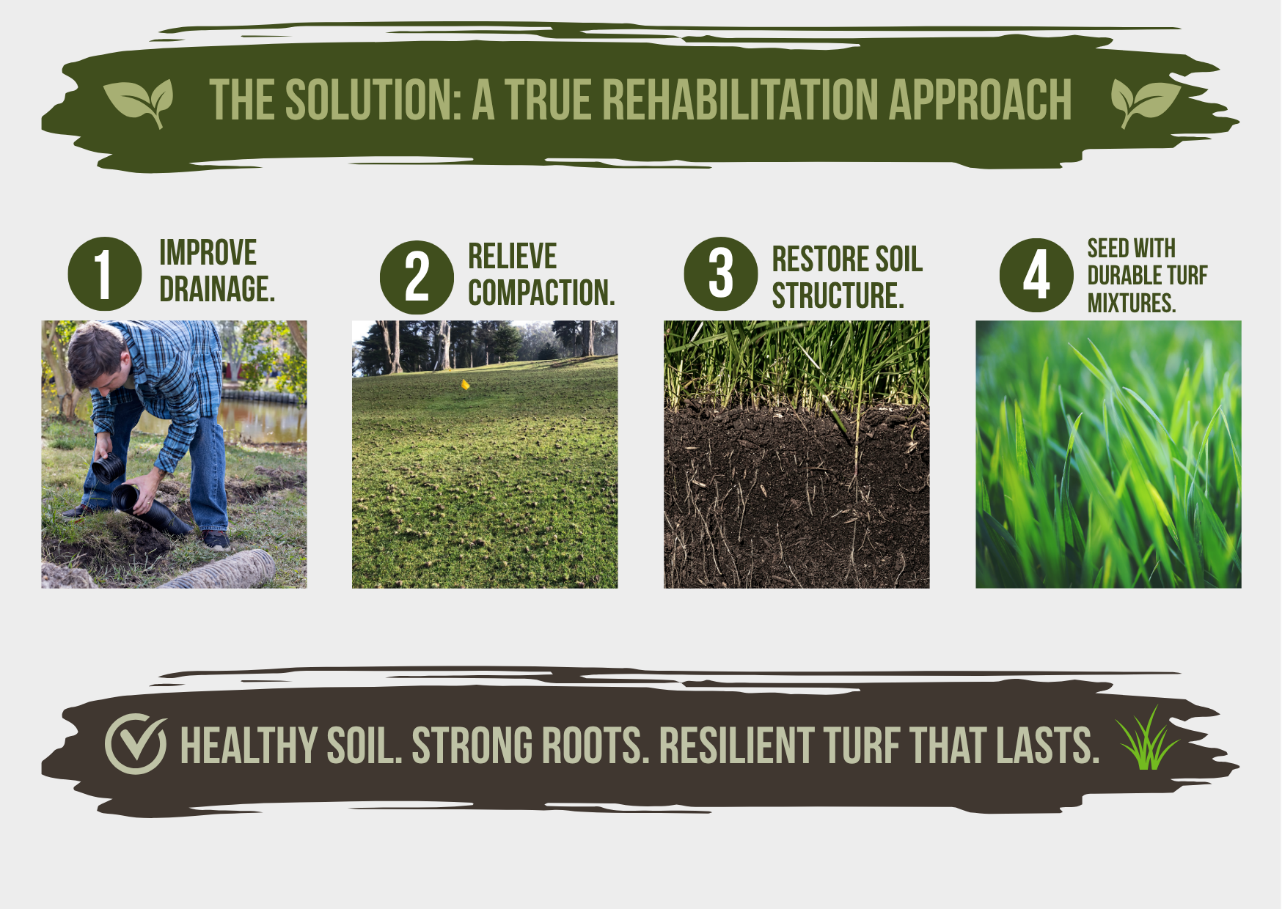
The solution is a true rehabilitation approach:
- Improve drainage.
- Relieve compaction.
- Restore soil structure.
- Seed with durable, traffic-tolerant turf mixtures.
 For Deer Creek Seed customers facing stubborn bare spots around homes, barns, sheds, and work areas, Sun & Shade Turf Mix and Sunny Turf Mix provide the durability and adaptability needed to rebuild stronger turf where ordinary lawn seed often struggles.
Key Takeaway
High-traffic areas require specialized "rehab" mixes, not just standard seed. By correcting compaction issues and planting durable options like Sun & Shade Turf Mix or Sunny Turf Mix, you can break the mud-and-dust cycle and create a thicker, more resilient stand of turf.
References
- University of California Agriculture & Natural Resources. Turfgrass Traffic and Compaction: Problems and Solutions. [ucanr.edu], [sportsfiel...gement.org]
- UMass Extension. Traffic Stress & Turf Cultivation. [umass.edu]
- UMass Extension. Compaction and Cultivation. [umass.edu]
- LSU AgCenter. Soil Compaction in Turf. [lsuagcenter.com]
- University of Vermont Extension. Correcting Soil Compaction in Lawns. [uvm.edu]
- Colorado State University Extension. CMG GardenNotes #215: Soil Compaction. [cmg.extens...ostate.edu]